Table of Contents
Strong spoken English can open doors to better career opportunities, higher education and personal growth. Yet many learners struggle to speak confidently despite having a good understanding of grammar. Today, Artificial Intelligence is making language learning more accessible through interactive conversations, instant feedback and personalised practice. But can AI really help you improve your spoken English? Scroll down and learn how AI supports English learning, where it falls short and how to use it effectively for lasting fluency.
Why Do Many Learners Still Struggle to Speak English?
Many people think that learning English grammar is enough to speak fluently. However, speaking English confidently requires regular practice, good pronunciation and self-confidence. This is why many learners who perform well in written exams still find it difficult to speak in English.
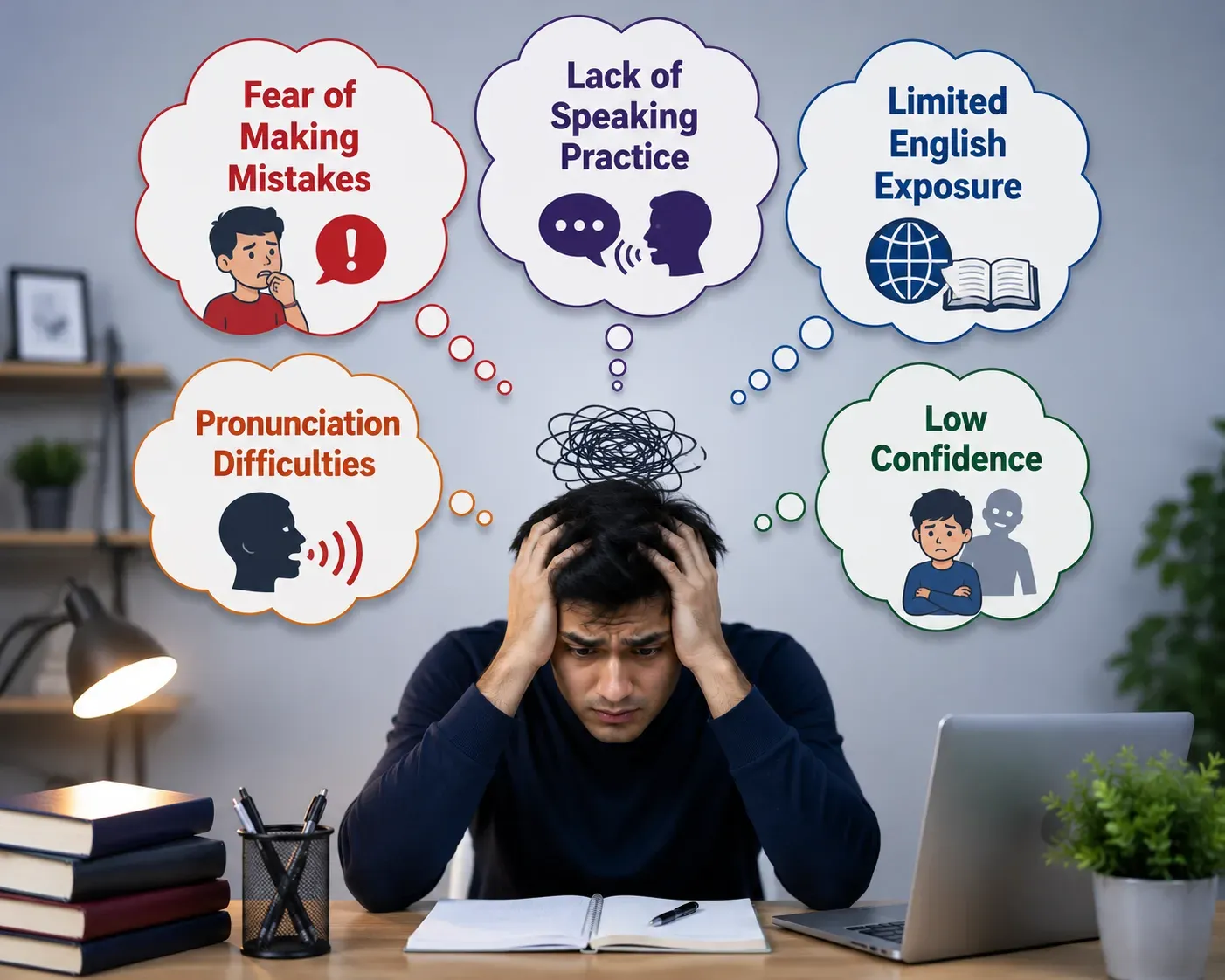
- Fear of Making Mistakes : Many learners are afraid of speaking incorrect English. They worry about being judged or laughed at, so they avoid speaking whenever possible.
- Lack of Speaking Practice : Reading books and learning grammar are important, but they cannot replace real conversations. The more you speak, the more confident you become.
- Limited English Exposure : Most learners use their native language at home, with friends and in everyday life. As a result, they get very few chances to practise speaking English regularly.
- Pronunciation Difficulties : Many learners are unsure how to pronounce words correctly. Without proper guidance and feedback, improving pronunciation becomes challenging.
- Low Confidence : Confidence does not come from memorising grammar rules. It develops through regular speaking practice and real conversations.
These challenges show why many learners struggle with spoken English. With consistent practice, the right guidance and modern learning tools, anyone can improve their English speaking skills.
What Is AI in Spoken English Learning?
Artificial Intelligence refers to computer systems capable of performing tasks that typically require human intelligence. In language learning, AI uses technologies such as speech recognition, natural language processing (NLP) and machine learning to analyse spoken language and provide personalised feedback.
Unlike traditional learning methods, AI creates an interactive environment where learners can practise speaking without fear of embarrassment or judgment.
Modern AI-powered English learning platforms can:
- Listen to your speech
- Evaluate pronunciation
- Detect grammatical mistakes
- Suggest better sentence structures
- Recommend vocabulary improvements
- Simulate real-life conversations
- Personalise lessons based on your progress
- Track learning performance over time
Instead of waiting for classroom sessions, learners can practise anytime and receive instant feedback.
Top Benefits of Using AI to Learn Spoken English
The biggest reason behind the growing popularity of AI in language learning is accessibility. With just a smartphone and an internet connection, learners can receive speaking practice, pronunciation feedback and vocabulary suggestions without waiting for classroom sessions. Here are some of the ways AI helps learners improve their English speaking skills.
1. Practice Anytime Without Waiting for a Teacher
Traditional spoken English classes usually follow a fixed timetable. If you miss a class, you often lose valuable learning time. AI removes this limitation by providing 24/7 access to speaking practice.
You can practise:
- Before attending an interview
- During lunch breaks
- While travelling
- After college
- Late at night
- Early in the morning
This flexibility helps learners maintain consistency, which is one of the most important factors in improving spoken English.
2. Build Speaking Confidence Without Fear
Many learners hesitate to speak English because they fear making mistakes in front of others. AI creates a judgment-free learning environment.
You can:
- Repeat the same conversation multiple times
- Correct your mistakes privately
- Improve gradually without embarrassment
- Practise difficult words until you master them
This safe learning space encourages learners to speak more frequently, which naturally improves confidence.
3. Improve Pronunciation with Instant Feedback
Pronunciation plays a major role in spoken English. Even if your grammar is strong, unclear pronunciation can affect communication. Modern AI tools analyse your speech and provide immediate suggestions on:
- Word pronunciation
- Sentence stress
- Intonation
- Voice clarity
- Speaking pace
Regular pronunciation practice helps learners communicate more clearly and confidently.
4. Learn Vocabulary Naturally
Instead of memorising long lists of words, AI introduces vocabulary through meaningful conversations. For example, while practising a restaurant conversation, you may learn words such as:
- Reservation
- Menu
- Beverage
- Dessert
- Bill
- Recommendation
Similarly, workplace conversations introduce professional vocabulary used in meetings, presentations, emails and interviews. Learning words in context makes them easier to remember and use in real-life situations.
5. Personalised Learning for Every Student
No two learners have the same strengths or weaknesses. AI identifies your learning patterns and recommends lessons based on your progress. For example:
Beginners
- Basic greetings
- Daily conversations
- Simple sentence formation
- Common vocabulary
Intermediate Learners
- Workplace communication
- Telephone conversations
- Public speaking
- Grammar improvement
Advanced Learners
- Debate practice
- Business presentations
- Interview preparation
- Professional communication
This personalised approach helps learners improve more efficiently than following a standard syllabus.
6. Track Your Progress
One of AI's strongest advantages is its ability to monitor improvement over time.
Many AI-powered learning platforms provide:
- Daily learning streaks
- Pronunciation scores
- Speaking fluency reports
- Vocabulary growth
- Grammar accuracy
- Weekly performance summaries
These insights help learners stay motivated and identify areas that need additional practice.
How AI Helps Different Types of Learners?
Whether you are a school student in Kerala, a college graduate preparing for placements, or a working professional aiming to improve workplace communication, AI offers a personalised learning experience that adapts to your individual needs. AI-based spoken English learning is suitable for people with different goals.
1. School Students : Students can improve classroom communication, presentations and overall confidence while developing a strong foundation in English.
2. College Students : AI helps college students prepare for group discussions, campus placements, internships and higher education interviews.
3. Job Seekers : Many recruitment processes include English interviews and communication assessments.
AI allows candidates to practise:
- HR interview questions
- Self-introductions
- Resume-based discussions
- Mock interviews
- Workplace conversations
4. Working Professionals : Professionals can improve:
- Email communication
- Client conversations
- Presentation skills
- Team meetings
- Leadership communication
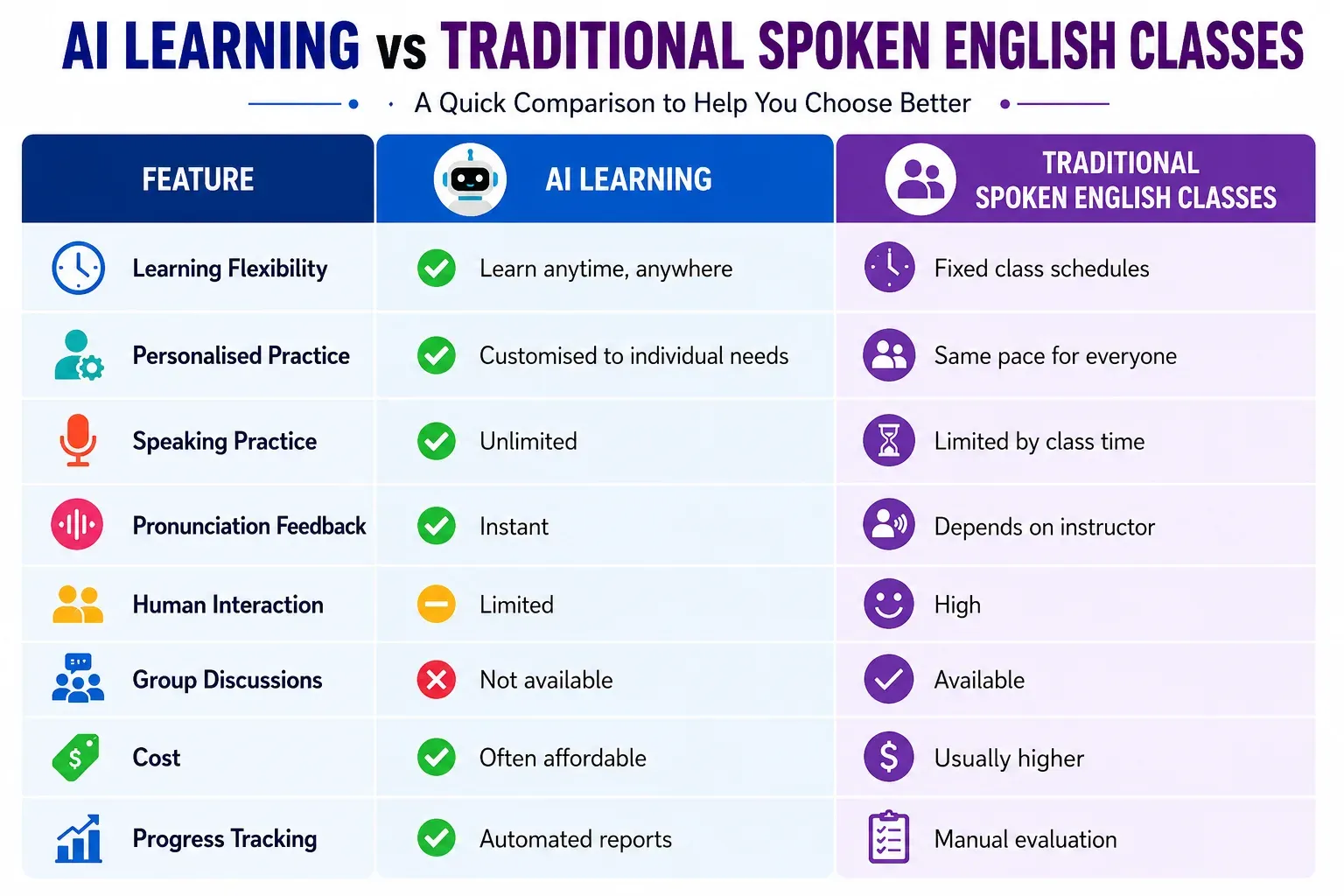
Limitations of AI in Spoken English Learning
While Artificial Intelligence has revolutionised language learning, it is important to understand that no technology can completely replace real human communication. AI is an excellent learning assistant, but the best results come from using it alongside regular conversations with teachers, mentors, friends, or colleagues.
AI offers personalised learning and instant feedback, but it still has certain limitations that learners should be aware of.
1. AI Cannot Fully Replace Human Conversations
Human conversations are dynamic and unpredictable. People express emotions, humour, sarcasm, cultural references and body language that AI cannot fully understand or respond to naturally.
For example, a real conversation during a job interview or business meeting often involves follow-up questions, emotional responses and spontaneous discussions. While AI can simulate many of these scenarios, it cannot completely replicate authentic human interaction.
That is why practising with teachers, classmates or English-speaking friends remains essential.
2. Limited Understanding of Cultural Context
English is spoken differently across countries and cultures.
For example:
- British English
- American English
- Australian English
- Indian English
AI tools generally recognise these variations, but they may not always explain the cultural context behind certain expressions, idioms or communication styles. Understanding cultural nuances is especially important for learners preparing to study or work abroad.
3. Speech Recognition Isn't Always Perfect
Modern AI speech recognition is highly advanced, but it can occasionally misunderstand:
- Strong regional accents
- Background noise
- Very fast speech
- Mispronounced words
Learners should not become discouraged if AI occasionally provides inaccurate feedback. Instead, they should use it as a guide while continuing to practise with real speakers.
4. Overdependence on Technology
Some learners become overly dependent on AI tools and avoid speaking with real people.
This can reduce opportunities to develop:
- Listening skills in natural conversations
- Confidence in group discussions
- Public speaking abilities
- Interpersonal communication
AI should support your learning, not replace real-life communication.
Can AI Replace Spoken English Teachers?
One of the most common questions learners ask is, "Can AI replace spoken English teachers?" The answer is no. AI is an excellent tool for spoken English learning, but it cannot replace the guidance, experience and human interaction that a skilled teacher provides.
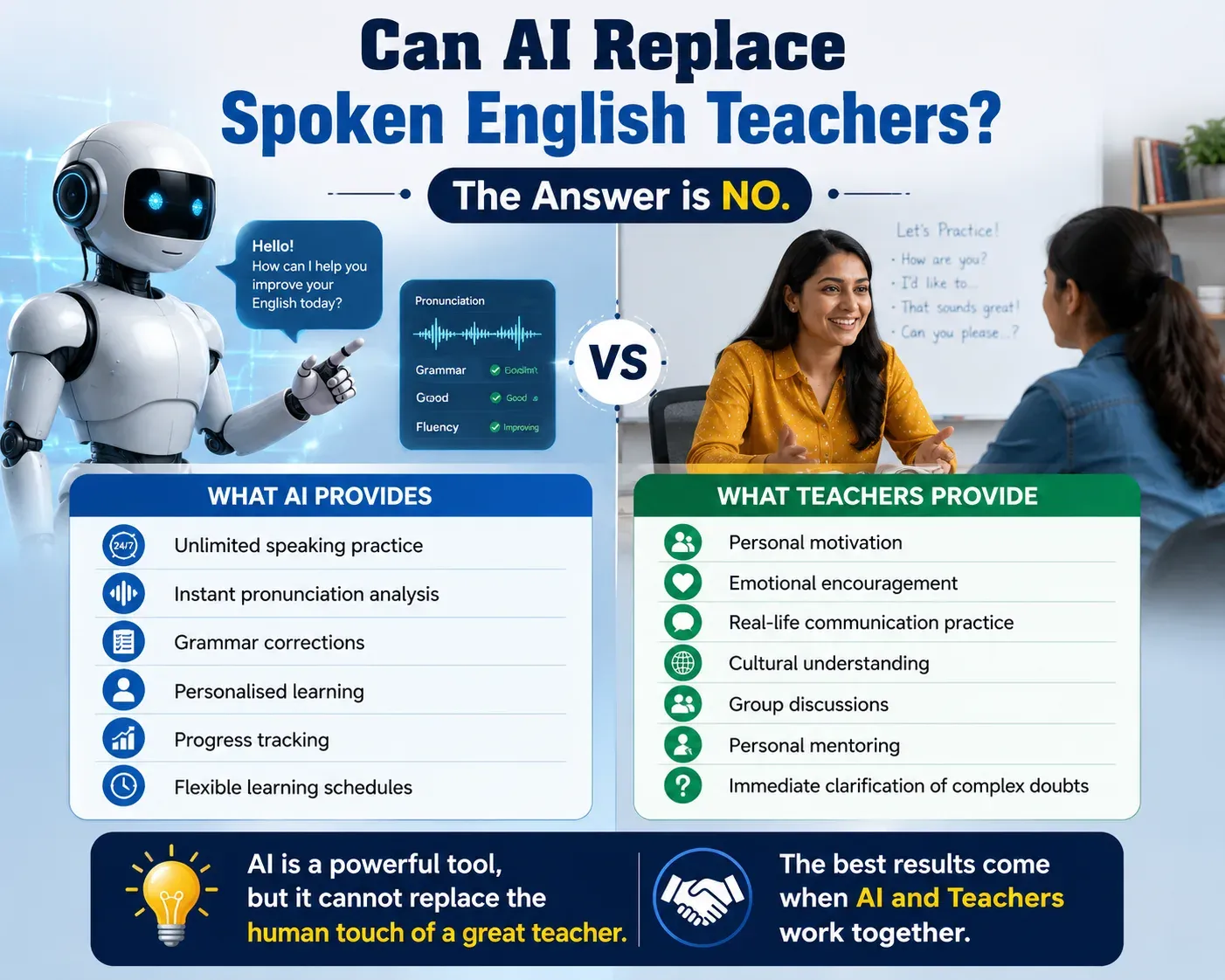
The most effective way to improve spoken English is to use both AI and teacher-led learning together. AI helps you practise every day, while teachers develop your communication skills through real conversations and personalised support.
Improve Your Spoken English with the CC Learning App
Ready to speak English with confidence?
CC Learning App, a multi learning platform, offers a comprehensive online spoken English course designed for students, job seekers, competitive exam aspirants, working professionals and anyone looking to improve their communication skills. Learn anytime, anywhere through live interactive classes, recorded sessions, expert trainer support.
Our Spoken English programme helps you strengthen pronunciation, grammar, vocabulary, fluency and everyday communication, enabling you to speak English with confidence in interviews, higher education, workplaces and daily life.
Whether you're preparing for career opportunities in India or abroad, the CC Learning App, best spoken English coaching app, provides the right learning environment to help you achieve your goals.
Frequently Asked Questions
1. Can AI really help improve spoken English?
Yes. AI can significantly improve spoken English by providing instant pronunciation feedback, grammar correction, vocabulary suggestions and interactive speaking practice. However, the best results come from combining AI practice with real conversations and consistent daily communication.
2. Which AI tools are best for learning spoken English?
Several AI-powered platforms and conversational assistants can help learners practise spoken English. The best choice depends on your learning goals, whether you want to improve pronunciation, prepare for interviews, build vocabulary, or develop overall fluency. Look for tools that offer voice interaction, personalised feedback and conversation practice.
3. Is AI suitable for beginners?
Absolutely. Most AI-based language learning platforms are designed to support learners at every level. Beginners can start with simple greetings, daily conversations and basic vocabulary before progressing to more advanced speaking exercises.
4. Can AI replace spoken English teachers?
No. AI is an excellent learning companion, but it cannot replace experienced teachers. Human trainers provide personalised guidance, emotional support, cultural understanding and real-time interaction that AI cannot fully replicate. A combination of AI practice and expert coaching is the most effective approach.
5. How much time should I practise spoken English with AI every day?
Practising for 20 to 30 minutes daily is generally enough to see steady improvement. Regular short sessions are usually more effective than studying for several hours once a week.
6. Can AI improve English pronunciation?
Yes. AI-powered speech recognition technology analyses pronunciation, stress, rhythm and intonation, helping learners identify and correct speaking mistakes more efficiently.
7. Is AI useful for IELTS, TOEFL, PTE and OET speaking preparation?
Yes. AI can simulate speaking tasks, provide pronunciation feedback, improve fluency and help learners practise common speaking topics. However, learners should also practise with experienced trainers to receive comprehensive feedback aligned with official exam expectations.
8. Can AI help job seekers improve interview communication?
Yes. AI can simulate HR interviews, mock discussions, self-introduction sessions and workplace communication scenarios. Regular practice helps job seekers speak more confidently during interviews and professional interactions.
Trending Updates