
Table of Contents
SEO in 2026 is no longer just about keywords, backlinks and technical optimization. Google's ranking systems increasingly prioritize websites that demonstrate Experience, Expertise, Authoritativeness and Trustworthiness (E-E-A-T). Websites that publish high-quality, people-first content backed by real experience, expert insights, trustworthy sources and strong user satisfaction signals are more likely to achieve higher rankings, greater organic traffic and sustainable SEO success If you need more information on this, find the complete details shown below.
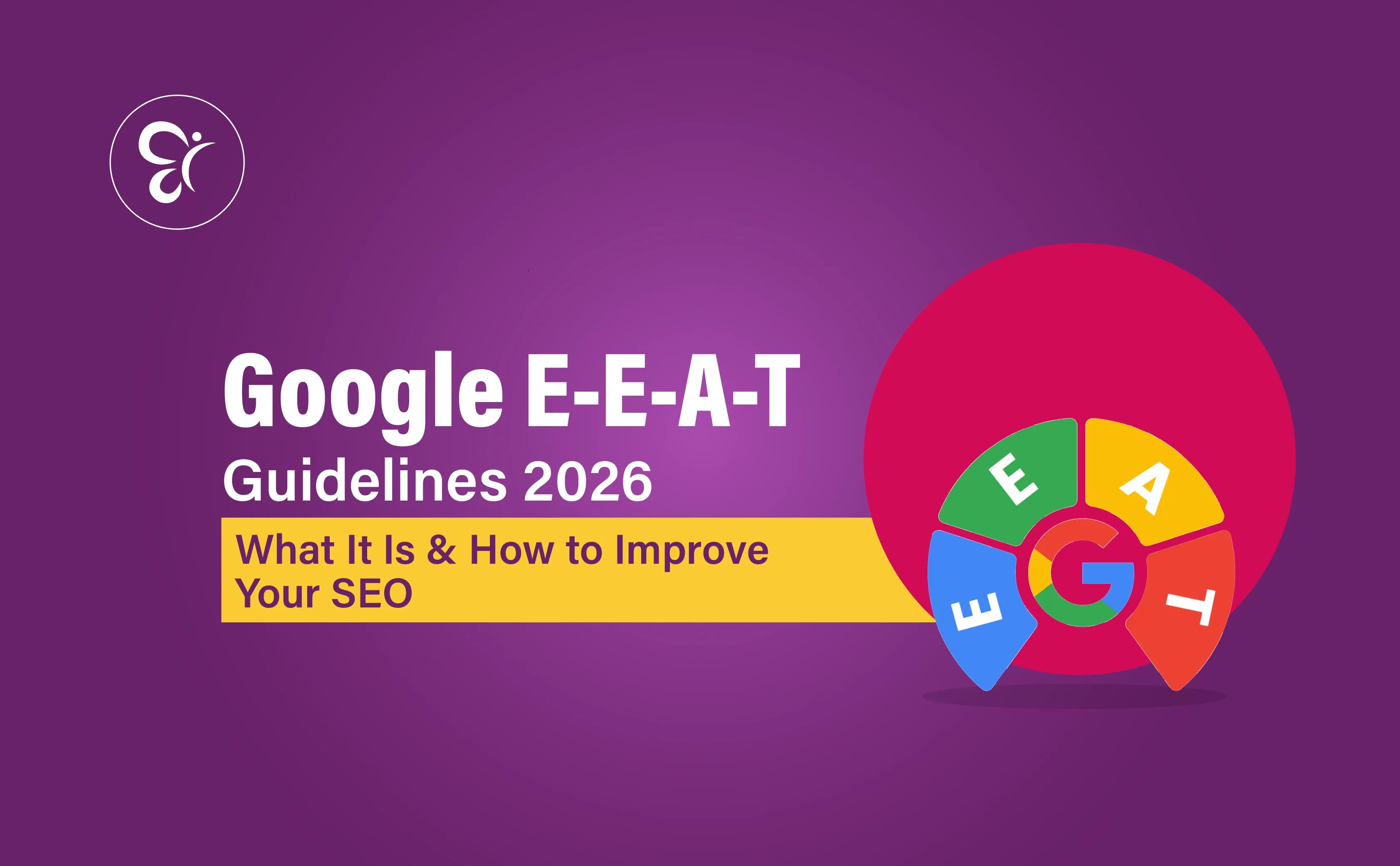
What Is Google E-E-A-T?
Google E-E-A-T is a quality evaluation framework help Google evaluate whether content is reliable, accurate, helpful, and created by people with genuine knowledge or experience. Websites that demonstrate strong E-E-A-T are more likely to earn user trust, improve search visibility, and achieve long-term SEO success. Today, E-E-A-T is one of the strongest indicators of content quality.
E-E-A-T Meaning
Letter | Meaning |
E | Experience |
E | Expertise |
A | Authoritativeness |
T | Trustworthiness |
Why E-E-A-T Matters for SEO in 2026?
Google's primary goal is to provide users with the most helpful and trustworthy information. With millions of AI-generated articles being published daily, Google is becoming more selective about what deserves top rankings. Websites that consistently publish helpful, expert-led content are more likely to succeed in modern search results.
Strong E-E-A-T can help:
- Improve Google rankings
- Increase organic traffic
- Strengthen brand credibility
- Improve user trust
- Increase click-through rates
- Enhance engagement metrics
- Build topical authority
- Improve conversion rates
Enrol Now on the Best Digital Marketing Course in Kochi
Tap Here
E-E-A-T : The 4 Pillars Google Uses to Rank Content in 2026
To understand how Google evaluates content quality, it's important to understand the four core components of E-E-A-T: Experience, Expertise, Authoritativeness, and Trustworthiness. Let's take a closer look at each pillar and how you can apply them to strengthen your SEO strategy in 2026.
1. Experience
Experience refers to first-hand knowledge of a topic.
Google prefers content created by people who have actually experienced what they are discussing.
Examples of Experience
- A Kerala PSC mentor sharing preparation strategies
- A digital marketer discussing SEO campaigns they personally managed
- A student sharing KTET exam preparation experiences
- A trainer explaining practical digital marketing projects
How to Demonstrate Experience?
- Case studies
- Student success stories
- Personal insights
- Practical examples
- Real-life applications
- Original screenshots
- Industry observations
The more authentic your experience signals, the stronger your E-E-A-T.
2. Expertise
Expertise measures how knowledgeable the content creator is.
Google wants users to receive accurate and well-researched information.
Ways to Demonstrate Expertise
- Publish in-depth guides
- Include accurate explanations
- Cite credible sources
- Update information regularly
- Use expert-reviewed content
- Cover topics comprehensively
For educational websites, expertise is critical because students depend on accurate information for their careers and examinations.
3. Authoritativeness
Authority refers to your reputation within a specific niche.
Google evaluates whether your website is recognized as a reliable source.
Authority Signals Include
- Quality backlinks
- Industry mentions
- Brand recognition
- Expert contributions
- Original research
- Comprehensive content hubs
For example, if multiple educational websites reference your Kerala PSC preparation resources, your authority increases significantly.
4. Trustworthiness
Trust is the foundation of E-E-A-T. Without trust, expertise and authority have little value.
Trust Signals Google Looks For
- Secure HTTPS website
- Transparent contact information
- Accurate content
- Clear author profiles
- Privacy policy
- Terms and conditions
- Updated information
- Positive user experience
Google's quality systems increasingly prioritize websites that users can trust.
How Google Evaluates Content Quality in 2026
While Google E-E-A-T guidelines 2026 are not direct ranking factors, Google's algorithms use various signals to assess content quality, relevance and trustworthiness. These signals help determine whether a webpage deserves higher visibility in search results.
Google typically evaluates:
- Content Quality - Does the content provide accurate, helpful, and valuable information?
- Author Expertise - Does the author have relevant knowledge, experience, or credentials?
- Website Authority - Is the website recognized as a trusted source within its niche?
- User Engagement - Do visitors spend time reading and interacting with the content?
- Content Freshness - Is the information regularly updated and relevant?
- Credible Sources - Are facts and claims supported by trustworthy references?
- Search Intent Satisfaction - Does the content fully answer the user's query?
In 2026, websites that focus on helpful content, topical authority, user experience and E-E-A-T SEO principles are more likely to achieve higher Google rankings and sustainable organic traffic.
E-E-A-T vs Traditional SEO
SEO has evolved significantly. While traditional SEO focused heavily on keywords and rankings, E-E-A-T SEO in 2026 prioritizes user trust, content quality, and credibility.
Modern SEO success requires more than keyword optimization. Google's ranking systems now reward websites that demonstrate Experience, Expertise, Authoritativeness, and Trustworthiness (E-E-A-T). The most successful websites combine technical SEO, content quality, user experience, brand reputation, and topical authority to achieve sustainable rankings and long-term organic traffic growth.
Traditional SEO | E-E-A-T SEO 2026 |
Focus on keywords | Focus on user trust and content credibility |
Ranking first | Helping users first |
Quantity of content | High-quality, valuable content |
Backlinks only | Reputation, expertise, and authority |
Search engine focused | Search engine and user focused |
Traffic-driven strategy | Authority-driven strategy |
10 Proven Strategies to Improve E-E-A-T and Improve SEO Rankings in 2026
Improving E-E-A-T (Experience, Expertise, Authoritativeness, and Trustworthiness) is essential for achieving higher Google rankings and building long-term organic traffic. Use these proven SEO strategies to strengthen your website's authority and credibility:
1. Create Original and Quality Content : Avoid simply rewriting competitors' articles. Publish unique insights, expert analysis, and valuable information that genuinely helps users.
2. Add Detailed Author Bios : Include author names, expertise, credentials, experience, and professional backgrounds to enhance trust and authority.
3. Build Topical Authority : Develop comprehensive content clusters around a specific niche. For example, a Digital Marketing cluster may include SEO, Content Marketing, Google Ads, Technical SEO, Local SEO, and E-E-A-T topics.
4. Publish Case Studies : Real-world case studies demonstrate experience, expertise, and proven results, which strengthen E-E-A-T signals.
5. Earn High-Quality Backlinks : Focus on acquiring backlinks from educational websites, industry publications, news portals, and reputable blogs.
6. Update Content Regularly : Fresh and updated content improves relevance, accuracy, and search visibility.
7. Improve Website Speed : Fast-loading websites enhance user experience, reduce bounce rates, and support SEO performance.
8. Strengthen Brand Authority : Build your online presence through social media marketing, YouTube content, guest blogging, and industry communities.
9. Use Credible References : Support important claims with trusted sources, research studies, and authoritative references.
10. Demonstrate Real Experience : Show practical examples, success stories, screenshots, testimonials, and measurable results whenever possible.
By implementing these E-E-A-T SEO strategies, websites can improve trust, authority, search engine rankings, and long-term organic traffic growth in 2026 and beyond.
Common E-E-A-T Mistakes to Avoid in 2026
Even well-optimized websites can struggle to rank if they ignore Google's E-E-A-T principles. Avoid these common SEO mistakes that can damage your website's credibility, trust, and search rankings:
- Keyword Stuffing - Overusing keywords makes content unnatural and reduces user experience.
- Thin or Low-Value Content - Publishing shallow content without useful information can hurt rankings.
- Anonymous Authors - Lack of clear author information reduces trust and expertise signals.
- Clickbait Headlines - Misleading titles can increase bounce rates and lower user satisfaction.
- Outdated Information - Old or inaccurate content can weaken authority and relevance.
- Poor User Experience - Slow-loading pages, intrusive ads, and poor mobile usability affect SEO performance.
- Unverified Claims - Unsupported statements reduce content trustworthiness and credibility.
- Low-Quality Backlinks - Spammy or irrelevant links can negatively impact website authority.
- Mass-Produced AI Content -
- Publishing AI-generated content without human expertise, editing, or fact-checking often fails to meet Google's quality standards.
Avoiding these mistakes helps strengthen E-E-A-T (Experience, Expertise, Authoritativeness, and Trustworthiness), improve content quality, and increase long-term organic search rankings.
Build a Successful Career with the Best Digital Marketing Course in Kerala
Digital marketing is one of the most in-demand skills in today's digital economy. As businesses increasingly focus on online growth, the demand for skilled digital marketing professionals continues to rise.
Join the Digital Marketing Course by CC Learning App and gain practical, job-oriented training in SEO, social media marketing, content marketing, Google Ads and performance marketing. Learn through hands-on projects, real-world case studies, live sessions, and expert mentorship designed to meet current industry standards.
Develop industry-ready skills, earn valuable certifications, and build the confidence needed to succeed in the competitive digital world. Download the CC Learning App today and start your journey toward becoming a successful digital marketing expert.
Download CC Learning App and Join Digital Marketing Course
Tap Here
Frequently Asked Questions
1. What is Google E-E-A-T in SEO?
Google E-E-A-T stands for Experience, Expertise, Authoritativeness, and Trustworthiness. It is a content quality framework used by Google to evaluate whether content is reliable, helpful, accurate, and created by knowledgeable individuals. Strong E-E-A-T signals can improve SEO performance, search rankings, and user trust.
2. Is E-E-A-T a Google Ranking Factor in 2026?
E-E-A-T is not a direct ranking factor like page speed or mobile usability. However, Google's algorithms use many signals related to E-E-A-T to assess content quality and trustworthiness. Websites that demonstrate strong experience, expertise, authority, and trust often achieve better search visibility and organic traffic growth.
3. Why is E-E-A-T Important for SEO in 2026?
E-E-A-T helps Google identify high-quality content that satisfies user intent. As AI-generated content continues to increase, Google prioritizes websites that provide authentic experiences, expert insights, trustworthy information, and positive user experiences. Strong E-E-A-T can improve rankings, credibility, conversions, and long-term SEO success.
4. How Can I Improve My Website's E-E-A-T?
You can improve E-E-A-T by:
- Publishing original and helpful content
- Adding detailed author bios
- Showcasing real-world experience
- Building topical authority
- Earning quality backlinks
- Updating content regularly
- Using trusted references and sources
- Improving website security and user experience
These strategies help strengthen trust and authority signals that support SEO rankings.
5. What Is the Difference Between E-E-A-T and Traditional SEO?
Traditional SEO focuses heavily on keywords, backlinks, and technical optimization. E-E-A-T SEO focuses on content quality, user trust, expertise, authority, and real experience. In 2026, successful SEO combines technical SEO best practices with strong E-E-A-T principles.
6. Does AI-Generated Content Affect E-E-A-T?
Google does not automatically penalize AI-generated content. However, content created solely by AI without human review, fact-checking, expertise, or unique insights may struggle to demonstrate strong E-E-A-T. Human expertise, original experience, and quality control remain essential for SEO success.
7. How Does Google Measure Trustworthiness?
Google evaluates trustworthiness through various signals, including:
- HTTPS website security
- Accurate and factual content
- Transparent contact information
- Author credentials
- Privacy policies
- Positive user experience
- Reliable citations and references
Trustworthiness is considered the most important component of E-E-A-T.
8. What Are Examples of Experience in E-E-A-T?
Examples of experience include:
- Case studies
- Personal success stories
- Product testing results
- Industry project examples
- Practical tutorials
- First-hand reviews
- Real-life demonstrations
Content created from direct experience often performs better because it provides unique value to users.
9. Can Small Websites Build E-E-A-T and Compete with Larger Brands?
Yes. Small websites can build E-E-A-T by publishing high-quality niche content, demonstrating expertise, sharing real experiences, earning relevant backlinks, and consistently helping users. Google rewards useful and trustworthy content regardless of website size.
10. How Often Should Content Be Updated for Better E-E-A-T?
Regular content updates help maintain accuracy, freshness, and relevance. Review important pages every 3–6 months and update outdated information, statistics, screenshots, references, and SEO data to improve content quality and search performance.
11. What Are the Biggest E-E-A-T Mistakes to Avoid?
Common E-E-A-T mistakes include:
- Keyword stuffing
- Thin content
- Anonymous authors
- Outdated information
- Unverified claims
- Spammy backlinks
- Poor website experience
- Publishing mass-produced AI content without human review
Avoiding these mistakes helps maintain trust, authority, and long-term search rankings.
12. Will E-E-A-T Become More Important for SEO After 2026?
Yes. Industry trends suggest Google will continue prioritizing content quality, user satisfaction, trustworthiness, and real expertise. Websites that invest in E-E-A-T today are more likely to achieve sustainable rankings and long-term organic traffic growth in the future.
Trending Updates


Related Blogs

March 13, 2026
20 Best Yoga Asanas (Yoga Poses) for Beginners - Benefits, Steps & Precautions
10 minute read
June 6, 2026
RRB Technician 2026 Notification Out | Last Date, Eligibility & Direct Apply Link
7 minute read
June 18, 2026
Google Ranking Guide 2026 : Everything You Need to Know About SEO
15 minute read
April 8, 2026