
Table of Contents
Candidates preparing for the Kerala SET exam 2026 for Botany should begin with the latest official Kerala SET Botany Syllabus 2026 PDF Download prescribed by LBS Centre for Science and Technology. Understanding the unit-wise syllabus helps you plan your preparation effectively, prioritise high-weightage topics, and avoid missing important concepts.
Get the Kerala SET Botany Syllabus 2026 PDF download, complete unit-wise syllabus, exam pattern, preparation tips, and resources to help you qualify the upcoming LBS SET exam confidently.
Kerala SET Botany Syllabus 2026 Highlights
The Kerala SET Botany Syllabus 2026 is prescribed by the LBS Centre for candidates appearing for Paper 2 (Botany) of the Kerala State Eligibility Test. The syllabus covers six units that include Plant Diversity, Taxonomy, Plant Physiology, Molecular Biology, Ecology, Biotechnology, Genetics, Plant Breeding, Bioinformatics, and Applied Botany. Candidates should prepare according to the official syllabus to maximise their chances of qualifying the Kerala SET July 2026 examination.
Check the important details related to the Kerala SET Botany Syllabus 2026 in the table below.
Particular | Details |
Exam Name | Kerala State Eligibility Test (Kerala SET) 2026 |
Kerala SET Exam Subject | Botany |
Kerala SET Exam Conducting Authority | LBS Centre for Science and Technology |
Kerala SET Exam Paper | Paper 2 (Botany) |
Kerala SET Exam Level | State Eligibility Test for teaching higher secondary school students in Kerala |
August 2, 2026 (Sunday) | |
Mode of Kerala SET Exam 2026 | Offline (OMR-Based) |
Kerala SET Exam 2026 Question Type | Multiple Choice Questions (MCQs) |
Kerala SET Exam Negative Marking | No Negative Marking |
Kerala SET Botany Syllabus 2026 Total Units | 6 Units |
Kerala SET Botany Syllabus 2026 Total Modules | Approximately 50+ Modules across six units |
Official Kerala SET Botany Syllabus 2026 | Prescribed by LBS Centre for Science and Technology |
Kerala SET Application Mode | Online |
Kerala SET Official Website |
Kerala SET Botany Syllabus 2026 PDF Download
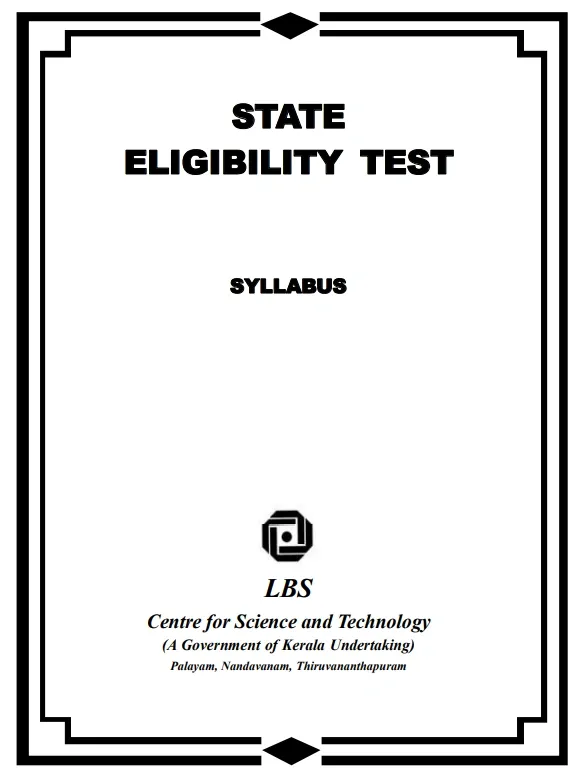
Kerala SET Botany Syllabus 2026 PDF Download is available in the LBS Centre for Science and Technology. The official syllabus provides a complete overview of all six units and their modules, helping candidates understand the topics covered in the both Kerala SET Paper 1 & Paper 2 and plan their preparation effectively. Download Kerala SET Botany Syllabus 2026 PDF from the official website or from the direct links given below.
- Click Here for Kerala SET Botany Syllabus 2026 PDF Download
- Click Here for Kerala SET Paper 1 (General Paper) Syllabus PDF Download
Kerala SET Botany Syllabus 2026 Unit-Wise
The Kerala SET Botany Syllabus 2026 is organised into six units, covering the fundamental and advanced concepts of Botany expected at the postgraduate level. The syllabus includes topics such as Diversity of Life Forms, Functional Plant Biology, Molecular Cell Biology, Ecology, and Applied Botany, with multiple modules under each unit. The complete Kerala SET Botany Syllabus 2026 is provided below as prescribed by the LBS Centre for Science and Technology.
Kerala SET English Syllabus 2026: Unit 1 – Diversity of Life Forms 1
Module 1. Bacteria
Classification, Ultra structure of cell, flagella, pili, metabolism, growth, reproduction and genetic exchange - transformation, transduction and conjugation
Module 2. Viruses
Classification, Structure, and Reproduction. Bacteriophages, lysogenic and lytic cycles. viroids, virions, prions, retroviruses.
Module 3. Phycology
Classification of algae, General structure, reproduction and life cycle of different groups-Cyanophyceae, Chlorophyceae, Bacillariophyceae, Xanthophyceae, Phaeophyceae, Rhodophyceae. Economic importance of Algae
Module 4. Mycology
Classification of fungi, General structure, reproduction and life cycle of different groups- Myxomycetes, Zygomycetes, Oomycetes, Ascomycetes, Basidomycetes and Deuteromycetes. Economic importance
Module 5. Lichenology
Classification, General structure and reproduction , Economic importance
Module 6. Bryology
Classification, General characters, reproduction and life cycle of different groups- Hepaticopsida, Anthocerotopsida and Bryopsida. Economic importance.
Module 7. Pteridology
Classification, General characters, reproduction and life cycle of different groups- Psilopsida, Lycopsida, Sphenopsida and Pteropsida, stelar evolution, telome concept Economic importance, Fossil Pteridophytes - Rhynia, Lepidodedron.
Module 8. Gymnosperms
Classification, General characters, reproduction and life cycle of different groups- Cycadales, Coniferales, Ginkgoales, Gnetales, Fossil Gymnosperms, Economic importance
Kerala SET English Syllabus 2026: Unit 2 Diversity of Life Forms 2
Module 1. Morphology
Morphological variation in angiosperms with respect to stem, leaf, inflorescence, flower and fruit
Module 2. Taxonomy of Angiosperms
Artificial (Linnaeus), Natural (Bentham & Hooker) and Phylogenetic (Bessey, Takhtajan), APG system of classification. Plant Nomenclature- Rules of ICBN, Author citation, Typification, Rule of Priority. Publication of names, Keys, autonym, homonym, basionym, and nomen nudum. Herbarium, Botanical survey of India, Botanical gardens and their roles in taxonomic studies. Modern trends in taxonomy - Anatomy, Embryology in relation to taxonomy, Chemotaxonomy, cytotaxonomy, numerical taxonomy, Molecular taxonomy. Origin and evolution of Angiosperms. Study the following families using morphological and floral features with economic importance- Annonaceae, Nymphyaceae, Polygalaceae, Brassicaceae, Portulacaceae, Dipterocarpaceae, Malvaceae, Fabaceae, Asteraceae, Rubiaceae, Asclepiadaceae, Solanaceae, Verbenaceae, Lamiaceae, Amaranthaceae, Euphorbiaceae, Urticaceae, Orchidaceae, Scitamineae, Arecaceae, Poaceae
Module 3. Economic Botany
Study Binomial, family, morphology of useful parts and utility of, Cereals and millets (Rice and Maize), Pulses ( Soy bean, Cow pea, Green gram), Oil yielding plants ( Coconut, Ground nut, Oil palm), Sugar yielding plants (sugar cane, Sweet potato), Spices and condiments ( Turmeric, Cinnamomum, Pepper, Nutmeg and Ginger), Fibre ( Cotton, Jute), Dye yielding plants ( Indigo, Henna , Annatto), Tuber crops ( Tapioca, Potato), Gum and resins( Asafoetida, White dammar, Gum Arabic), Medicinal plants ( Ocimum, Neem, Rauwolfia), Timber yielding Plants ( Rose wood, Teak wood, Ailanthus), Narcotics (Opium, Cannabis), Vegetables ( Tomato, Brinjal, Cucumber), Rubber ( Para rubber)
Module 4. Ethnobotany
Definition, History and scope of Ethnobotanical studies
Module 5. Histology
Vascular cambium structure, origin and functions, Normal primary and secondary growth of stem and roots. Structure of woodHeart, Sap wood,Hard and soft wood. Anomalous secondary growth in the stems of – Boerhaavia, Bignonia and Dracaena, Nodal anatomy and root stem transition, Floral anatomy
Module 6. Microtechnique and Histochemistry
Killing, Fixing and staining of plant tissues principles and purposes, Important fixatives and their properties, FAA, Carnoy's fluid and Flemmings fluid, Dehydrating agents. Microtome- rotary, sledge, cryotome and ultratome. Different types of stains, Tissue processing techniques for Scanning and transmission electron microscope, Types of micro slide preparations- Temporary, semi- permanent, permanent smears and squashes, Methods of embedding plant materials in Paraffin wax – TBA method, Double stained and serial section preparations, Histochemistry and Enzymology- Localization of carbohydrates ( PAS ) lipids ( Sudan Black) and proteins ( Coomassie Brilliant Blue) , Principle and protocol of Localization of peroxidase
Module 7. Reproductive Biology
Asexual reproduction-adventive embryony, nonrecurrent apomixis. Diplospory, apospory, parthenogenesis, androgenesis, apomixis ; Sexual reproduction – microsporogenesis, male gametophytepollen fertility, sterility; Megasporogenesis, female gametophyte, types ; Pollination Biology-Primary and secondary attractants of pollination, ultra-structural and histochemical details of style and stigma, Pollen pistil interaction, Fertilization barriers, incompatibility and methods to overcome it ( intra ovarian pollination and in vitro fertilization, embryo rescue technique; Embryo, endosperm and seed development, polyembryony and parthenocarpy, Recent advances in palynological studies, Pollen allergy, economic importance of pollen, Melissopalynology, role of apiaries in crop improvement
Kerala SET English Syllabus 2026: Unit 3 Functional Plant Biology and Analysis Plant Physiology
Module 1 Water movements in plants and inorganic nutrition:
Diffusion and facilitated diffusion pressure driven bulk flow, Osmosis driven by water potential gradient, Role of aquaporins, cavitation and embolism, Soilplant-atmosphere-continuum; physiology of stomatal function. Nutrient elements: Physiological roles. Nutrient uptake: diffusion, facilitated diffusion and apparent free space. Passive and active transport. Transport proteins: carriers, Michaelis-Menten Kinetics. Channels: Voltage dependent K+ channels, voltage gated channels, Calcium channels, Vacuolar malate channels. ATPase activity and electrogenic pumps. Patch clamp studies. Application of Nernst equation. Active transport and electrochemical potential gradients.
Module 2. Metabolism
Nitrogen metabolism: Nitrogen and biogeocycle, nitrate and ammonia assimilation, biological nitrogen fixation, nitrogenase activity, pathways and enzymes - GS, GOGAT and GDH. Transport of amides and ureides. Photosynthesis : Light absorption, electron transfer in chloroplast membranes, ATP synthesis in chloroplast. Photosynthetic carbon reduction and photorespiratory cycles. C4 and CAM metabolism. Starch and sucrose synthesis. Allocation and partitioning: Phloem loading and unloading. Concept of osmotically generated pressure flow. Importance of plasmodesmata in symplastic transport. Respiration: Glycolytic reactions, citric acid cycle, electron transfer system and ATP synthesis. unique electron transport enzymes of plant mitochondria: external NAD(P)H dehydrogenase, rotenone and cyanide insensitive respiration.
Module 3. Growth, differentiation and development
Analysis of plant growth: production of cells, growth velocity profile. Cytological and biochemical events. Differentiation: secondary cell wall formations, multinet growth hypothesis of cell wall. Development: initiation and regulation of development, genes involved in the control of development, role of protein kinases. Types of development: flowering-floral induction, evocation and morphogenesis. Floral organ identity genes. Biochemical signaling: Theories of flowering. Control of flowering-phytochrome, cryptochrome and biological clock. Factors affecting flowering: Photoperiodism and thermoperiodism. Fruit development and ripening: physiology of ripening- cell wall architecture and softening, enzymes involved in biochemical changes. Seed development and germination physiology: deposition of reserves during seed development, desiccation of seeds: hormones involved, desiccation tolerance. Classification of seeds, seed dormancy. Seed germination and reserve mobilization/metabolism of carbohydrates, lipids, proteins and phytins; physiology of seed dormancy. Plant growth regulators: Auxins, Gibberellins, Cytokinin, Abscisic acid and Ethylene - biosynthesis, transport, physiological roles, mode of action, commercial uses.
Module 4. Photoreceptors
Phytochromes - photochemical and biochemical properties, localisation in cells and tissues, phytochrome induced whole plant responses, Ecological functions. Mechanisms of phytochrome regulated differentiation. Signal transduction pathways, role in gene expression. Cryptochromes: blue light hormones photophysiology, effect on stem elongation, gene expression, stomatal opening, proton pumps, phototropism, role of carotenoids. Signal transduction. Classes of signals; receptors, signal perception, signal amplification and transduction reactions, role of Ca++ as second messengers, role of Calmodulin .
Module 5. Stress physiology and senescence:
Water deficit and drought resistance, heat stress and heat shock, chilling and frost, salinity stress, high light stress and heavy metal pollution stress. Genes associated with senescence, metabolism during senescence.
Module 6. Chemical bonds
Concept of hybridization, bonding in organic molecules, effect of bonding on reactivity, polarity of bonds-bond length-bond angle, hydrogen bond, dissociation and association constant. pH and buffers – Henderson-Hasselbalch equation, pH, pKa, Kw, proton hopping, buffers in living system, common buffers.
Module 7. Carbohydrate
Specific categories and their properties, metabolism of starch, cellulose and glycogen. Glycolysis, TCA cycle, terminal oxidation, gluconeogenesis, glyoxylate pathway, PPP pathway, glycoproteins and proteoglycans, biosynthesis of peptidoglycan, metabolic mill.
Module 8. Amino acids and proteins
amino acids – classification, properties, optical activity, unusual amino acids, ninhydrin reaction; basics of biosynthesis and breakdown of amino acids, classification and conformation of proteins, Ramachandran plot, Brief account on the biosynthesis of protein.
Module 9. Lipids
classification, brief account on compound and derived lipids with examples, classification of fatty acids, biosynthesis of fatty acids (microbes, plants and animals), alpha, beta and omega oxidation of fatty acids, omega fatty acid and functional food, trans-fatty acids and their dangers.
Module 10. Nucleic acid
Biosynthesis and breakdown of purines and pyrimidines. Enzymes for synthesis and degradation; Vitamins: classification, structure, function and source of vitamins, vitamins as coenzymes
Module 11. Enzymology
structure, function and classification of enzymes, coenzymes, substrate specificity, regulation of enzyme activity, active sites, inhibitors, allosteric enzymes, kinetics, negative and positive co-operativity, multienzyme, isoenzymes, ribozyme, abzyme
Module 12. Energy metabolisms
concept of free energy, entropy, enthalpy, chemical equilibria, principles of thermodynamics, thermodynamics of phosphate compounds, thermodynamics of life; thermodynamics, kinetics and mechanisms of membrane transport, energy rich bonds, redox reactions. Principles and application of tracer techniques in biology, Radio isotopes, radiation dosimetry, radioactive decay, Cerenkov radiation, radiations and their applications in biology.
Module 13
Principles and applications of light and electron microscopy, phase contrast, fluorescence, scanning and transmission electron microscopy, cytophotometry, flow cytometry, micrometry, camera lucida, photomicrography. Instrumentation, principles and functioning of: colorimetry and spectrophotometry, atomic absorption spectroscopy, plasma emission spectroscopy, ORD/CD, centrifugation, ultracentrifugation, electrophoresis, isoelectric focusing, autoradiography, chromatography (TLC, gel filtration, ion exchange, affinity, GC, GC-MS, HPLC, FPLC), NMR, X-ray crystallography, MRI, tools in nanotechnology (Atomic Force Microscopy, Scanning Tunneling Microscope, Scanning Probe Microscope), Fluorescent Microscopy, Flow cytometry, Liquid scintillation.
Module 14
Measures of central tendencies- mean, median and mode. Skewness and curtosis. Measures of variations- range, quartile deviation, mean deviation- variance and standard deviation. Standard error and Coefficient of variation; Probability: addition theorem and multiplication theorem, conditional probability; Theoretical distributions: binomial, poisson and Normal; Tests of significance- z, t and χ2 tests; distribution and Analysis of variance; Correlation and regression analysis; Factor analysis.
Kerala SET English Syllabus 2026: Unit 4 Molecular Cell Biology and Heredity
Module 1. Cell
Structural organization of cell membrane: chemical composition, structure and function of membrane proteins, lipids and carbohydrates, functions of cell membrane. Structure and functions of cell organelles and sub-cellular particles, Endosymbiont hypothesis, Structure, assembly and disassembly of filaments involved – actin filaments, microtubules and intermediate filaments. Molecular motors- kinesins, dyneins and myosins.
Module 2. Organization of genetic material in eukaryotes
Phases of cell cycle, cell cycle control mechanisms – extracellular and intracellular signals, cell cycle check points – DNA damage check points, centrosome duplication check points, spindle assembly check points, Cell Division –details of mitosis and meiosis, significance. Apoptosis – mechanism and regulation
Module 3. Cell Cycle
Structure of chromatin and chromosomes, histones and non-histone proteins, nucleosome structure, chromatin packaging, structure of metaphase chromosome, molecular structure of centromere and telomere, Chromosomal aberrations: Structural and numerical aberrations, Phenotypic effects of chromosomal aberrations, Special types of chromosomes: lamp brush and polytene chromosomes
Module 4. Cell communication and signaling
General principles of cell communication, signaling molecules and their receptors, cell surface receptors - ion channel linked receptors, G-protein coupled receptors and Tyrosine Kinase Linked receptors, steroid hormone receptors, Signal transduction pathways, second messengers, regulation of signaling pathways
Module 5. Genetic material: structure, replication and repair
Experiments which proved that DNA is the genetic material, Chargaff’s rule, experiment which proved that DNA replication is semi conservative , Structure of the nitrogen bases, structure of nucleotides, Watson and Crick model of DNA: salient features, alternative forms of DNA, Transposons – types, transposition mechanism; DNA replication(in both prokaryotes and eukaryotes): process, proteins and enzymes involved, end replication problem and the role of telomerases; DNA repair: DNA proof reading, mismatch repair, nucleotide excision repair, base excision repair, direct repair, SOS response and error prone repair
Module 6. Gene expression
Central dogma of molecular biology, concept of gene, one gene one enzyme hypothesis; Transcription in Prokaryotes: Promoters, RNA polymerase – structure and function, initiation complex, rho dependent and independent termination mechanisms; Transcription in eukaryotes: Promoters, enhancers, and silencers, different types of RNA polymerase and their function, transcription factors – structure and function, elongation factors, termination mechanism; Post transcriptional modification of RNA: Structure, formation and function of 5’ cap and 3’ tail, RNA splicing – types of introns, mechanisms of exon splicing, alternative splicing, exon shuffling, RNA editing ; Translation: salient features of mRNA, tRNA and ribosomes (prokaryotic and eukaryotic), SD sequence and Kozak sequence, tRNA charging , process of translation (prokaryotic and eukaryotic), mRNA surveillance; Genetic code: deciphering the genetic code, salient features of the genetic code, exceptions to the Universal code; Protein sorting and trafficking
Module 7. Gene regulation
Gene regulation: objectives, different levels; Viral gene regulation: gene regulation in lysogenic repression and lytic cascade; Prokaryotic gene regulation: operon – general structure and types, structure and functioning of lac operon and trp operon, attenuation and antitermination; Eukaryotic gene regulation: Changes in chromatin and DNA structure, chromatin remodeling, heterochromatization and DNA methylation, RNA silencing, Epigenetics
Module 8. Principles of inheritance
Mendel’s experiments and laws of inheritance, monohybrid and dihybrid crosses – phenotypic and genotypic ratios, back cross and test cross, Mendelian traits in man, Extensions of Mendelism, codominance, incomplete dominance, epistasis, complementary interaction of genes, multiple alleles and their inheritance, penetrance and expressivity, cytoplasmic inheritance
Module 9. Linkage and recombination
Linkage groups, double cross over and interference, two point and three point test crosses, construction of linkage map
Module 10. Population Genetics
Gene pool, phenotype and genotype frequency, factors affecting gene frequency, Hardy- Weinberg equilibrium
Module 11. Immunology
Innate and acquired immunity; Humoral and cellular immunity; antigens, epitopes, antigen processing and presentation; activation and differentiation of B cells, role; T cells , types, role; T cell receptors; MHC; monoclonal and polyclonal antibodies, vaccines
Kerala SET English Syllabus 2026: Unit 5 Ecology and Environment
Module 1. Basic Principles of Ecology
Basic ecological concepts and approaches – levels of organization – environment, habitat; basic ecological process – biogeochemical cycles, trophic levels, energy flow, ecological pyramids; ecological succession
Module 2. Ecological objects
Population, community and ecosystems; Population characteristics – distribution, mortality, natality, carrying capacity, population structure and dynamics; genecology, ecads and ecotypes; Community characteristics – classification of plant communities – Clementsian concepts of climax, Raunkiaer’s system, Vegetation concept of Gleason, Phytosociological methods; Ecosystem characteristics - food chain, food web, ecological niche, biodiversity – genetic, species and ecosystem diversity, alpha, beta and gamma diversity; major ecosystems of the world and their characteristics; Biomes and Biosphere characteristics – ecosystem degradation – deforestation and desertification
Module 3. Environmental Pollution
Concept of pollution, Environmental quality parameters and standards, different categories of pollution – air, soil and water; air water and soil quality parameters; pollutants – primary and secondary pollutants – heavy metal pollution – biocide residues - biomagnification; prevention and control of pollution and pollution abetment – primary, secondary and tertiary water treatment
Module 4
Global environmental issues – ozone depletion, acid rains, global warming and climate change – greenhouse gases and emission control – global conventions on carbon dioxide emissions; radiation fallout, noise pollution – occupational hazards
Module 5. Basic principles of conservation and preservation
Conservation strategies – in situ and ex situ conservation – botanical gardens – wildlife sanctuaries, national parks and biosphere reserves – International conventions on biodiversity – role of IUCN and the criteria of species conservation, categories of species under conservation – threatened and endangered species – red data book – CITES
Module 6. Natural resources
Conservation of natural resources – conservation agriculture – mixed farming, natural farming, ecofarming, organic farming, natural measures of pest control, biofertilizers, energy conservation – nonconventional energy resources – biomass energy – biogas – biofuels – biodiesel
Module 7. Phytogeography
Basic concepts and significance - static and dynamic phytogeography geological history of plant distributions – theories of plant distributions – continental drift and glaciations - paleotropic and neotropic vegetation – different kinds of plant distributions - circumaustral – circumpolar – pantropic – cosmopolitan - floristic provinces and vegetational belts – soil, climate and vegetation of India
Module 8. Evolution
Origin of the universe – big-bang theory – origin of life and origin of species – Oparin’s theory - theories of evolution of life – elan vitae – comparative accounts of evolutionary concepts of Lamarck and Darwin – role of mutation in evolution – forces and mechanisms of evolution of life – speciation – isolation mechanisms – co-evolution of species into communities - molecular evolution
Kerala SET English Syllabus 2026: Unit 6 Applied Botany
Module 1. Biotechnology
Tissue culture techniques; Explants, culture media, differentiations, micropropagation, meristem culture, callus culture, shoot tip, nodal culture, organogenesis, cell suspension culture, cell line selection, hairy root culture; Somaclonal variation; Somatic embryogenesis- artificial seeds, protoplast culture, somatic hybridization; Haploid production- anther and ovule culture, diploids & polyploids, applications; Cryopreservation, Bioreactor technology, cell immobilization, Genomic and organelle DNA isolation, vector mediated and vectorless methods of gene transfer, PCR, restriction digestion, ligation, DNA sequencing, Genomic and cDNA libraries; Analysis and expression of cloned genes DNA markers, RFLP, RAPD, ISSR, SSR, SNPs, AFLP, LCR, Genetic engineering; Transgenic biology, alophany, transformation techniques, gene targeting, RNAi technology Microbial biotechnology; Major products of industrial microbiology, compounds used in medicine, health- antibiotics, amino acids, organic acids, vitamins, sex hormones, Biopolymers, biosurfactants, biopesticides; Bioconversion processes- biotransformation, biodegradation and bioleaching; GMO- Bt plants, Herbicidal resistance, viral coat protein, satellite RNA , Flavr savr tomato, golden rice, Biofortification; Social ethical issues IPR, patents, biopiracy and bioregulations
Module 2. Bioinformatics
Biological databases ; EMBL, GEN BANK, DDBJ, Protein sequence data bases- PIR, SWISS-PROT, Secondary data bases (PROSITE); Protein structure databases (PDB), Data base mining, data bases similarity searches- comparing nucleotide and amino acid sequence – BLAST, FASTA, Sequence analysis- global alignment, local alignment, pairwise analysis, scoring matrices, multiple sequence analysis , phylogenetic analysis, structure analysis tool – RASMOL, Molecular phylogenetic programmes- CLUSTAL, Pharmacogenomics; Application of Bioinformatics Transcriptomics, metabolomics, Pharmocogenomics, Genomics, types, structural and functional, genome annotation, gene finding, single nucleotide polymorphism.
Module 3. Horticulture
Plant growing structures-Green house, mist chambers, glass house; Plant propagation seed, vegetative- natural and artificial; Artificial methods of vegetative propagationcutting, layering, grafting, budding, Cultural practices – thinning, training, trimming and pruning; Commercial horticultural nurseries, orchards, floriculture, indoor plants, arboriculture- pruning, bracing, transplanting; Bonsai: Principles and procedure
Module 4. Plant Breeding
Plant introduction, Vavilos centres of origin, genetic erosion, gene bank, NBPGR, selection (Mass and pureline and clonal) hybridization - interspecific and intergeneric Incompatibility and crop improvement, Backcross breeding, Inbreeding consequences, idiotype breeding Polyploidy breeding; auto and allopolyploid, chromosome addition and substitution, achievements, Mutation breeding; Objectives, procedures, chemical and physical mutations and achievements; Resistance breeding; Principles, methodology- structural, biochemical, physiological and genetic, vertical and horizontal resistance; Seed certificationPlant breeder’s right act, National Biodiversity policy
Module 5. Plant Diseases and Management
Host parasite interactions, Etiology of the following diseases- False smut of Paddy, Powdery mildew of Rubber, Coffee rust, Red rust of tea, Leaf spot of Mango, Yellow vein mosaic of ladies finger, quick wilt of pepper, Defense mechanism- systemic acquired resistance and induced systemic resistance, Quarantine., Plant disease controls-chemical, physical and biocontrol agents
Download the CC Learning App today and prepare efficiently for Kerala SET 2026 with organised study materials and expert support!
Join Today!
Kerala SET Botany Exam Pattern 2026
Understanding the Kerala SET Botany Exam Pattern 2026 is just as important as knowing the syllabus. The Kerala State Eligibility Test consists of two objective-type papers conducted in offline (OMR-based) mode. Candidates must prepare for both Kerala SET Paper 1 (General Paper) and Kerala SET Paper 2 (Botany), as each paper evaluates different aspects of their eligibility.
Kerala SET Botany Exam Pattern 2026 | ||
Particular | Kerala SET Paper 1 (General Paper) | Kerala SET Paper 2 (Botany) |
Purpose | General Aptitude | Subject Knowledge (Botany) |
Question Type | Multiple Choice Questions (MCQs) | Multiple Choice Questions (MCQs) |
Number of Questions | 120 | 120 |
Maximum Marks | 120 | 120 |
Marks for Each Correct Answer | 1 Mark | 1 Mark |
Negative Marking | No | No |
Read More at:
- Kerala SET Hall Ticket 2026 Out: Download July Exam Admit Card at lbsedp.lbscentre.in
- Kerala SET History Syllabus 2026 PDF Download: Latest LBS SET Paper 2 Syllabus & Exam Pattern
- Kerala SET English Syllabus 2026 PDF Download: Unit-wise Syllabus, Exam Pattern & Preparation Guide
- Kerala SET Commerce Syllabus & Exam Pattern 2026
- Kerala SET Physics Syllabus 2026 PDF Download: Latest LBS SET Paper 2 Syllabus & Exam Pattern
- How to Qualify Kerala SET Exam in 30 Days (2026): Study Plan, Pass Marks & Preparation Tips
- Kerala SET July 2026 Notification Out | Eligibility & Application Process
- Kerala SET July 2026 Exam Date Announced! Admit Card & Latest Updates
- Kerala SET July 2026 – Notification, Exam Date, Eligibility & Preparation Guide
Prepare for Kerala SET July 2026 with CC Learning App
The Kerala SET July 2026 exam is scheduled for August 2, making every remaining day valuable for focused preparation. Instead of spending time deciding what to study, join the best online SET coaching in Kerala by CC Learning App, a multi learning platform, designed to help candidates revise the most important topics, practice expected questions, and strengthen concepts that frequently appear in the examination.
You will Get
- Complete Kerala SET Botany syllabus-oriented revision
- High-priority Botany topics
- Kerala SET Botany Previous year question discussion
- Practice MCQs
- Quick revision sessions
- Expert faculty guidance
- Personal Mentorship
Download the CC Learning App today and prepare efficiently for Kerala SET 2026 with organised study materials and expert support.
Frequently Asked Questions for Kerala SET Exam 2026
Is the Kerala SET Botany syllabus the same for 2026?
Yes. Candidates should always refer to the latest Kerala SET Botany syllabus 2026 published by the LBS Centre. The official syllabus PDF remains the most reliable source for preparation.
Where can I download the Kerala SET Botany syllabus PDF?
You can download the official Kerala SET Botany syllabus PDF from the LBS Centre for Science and Technology website or from the official download link above for easy access.
How many units are included in the Kerala SET Botany syllabus 2026 PDF Download?
The Kerala SET Botany syllabus 2026 PDF Download consists of six major units covering topics such as Diversity of Life Forms, Functional Plant Biology, Molecular Cell Biology, Ecology, Biotechnology, Plant Breeding, Bioinformatics, Plant Diseases, and Applied Botany.
Which topics are most important for Kerala SET Botany Exam 2026?
Candidates should pay special attention to Plant Physiology, Molecular Biology, Genetics, Biotechnology, Ecology, Taxonomy, Plant Anatomy, Plant Breeding, and Plant Pathology, as these areas require strong conceptual understanding and frequently contribute significantly to the Kerala SET exam 2026.
Is the Kerala SET Botany exam 2026 objective?
Yes. Kerala SET exam 2026 consists of objective-type multiple-choice questions. Candidates should practice MCQs regularly alongside revising the official syllabus.
How should I prepare for Kerala SET Botany July 2026 in a short time?
Begin your Kerala SET exam preparation with the official syllabus, prioritise high-weightage topics, revise concepts systematically, solve previous year questions, and take mock tests regularly. A proper revision course can help you cover important areas efficiently before the examination.
Notifications
Trending Updates


Related Blogs

April 3, 2026
Kerala SET July 2026 – Notification, Exam Date, Eligibility & Preparation Guide
5 minute read
May 26, 2026
Kerala SET July 2026 Exam Date Announced! Admit Card & Latest Updates
8 minute read
April 24, 2026