
Table of Contents
The competition for the Kerala Teacher Eligibility Test is expected to increase rapidly in 2026 due to rising LP teacher vacancies across Kerala schools. Candidates searching for the latest KTET Category 1 Syllabus 2026 PDF, updated exam pattern, subjects, marks distribution, pedagogy topics, and KTET preparation tips can find the complete details here, including exam pattern and preparation strategy for KTET aspirants.
KTET Category 1 Exam Details
Candidates preparing for the Kerala Teacher Eligibility Test should first understand the complete KTET category 1 exam details before beginning their preparation. Having a clear idea about the exam mode, total questions, marks distribution, duration, and syllabus structure can help aspirants plan their studies effectively and improve their overall preparation strategy. See the complete KTET category 1 exam highlights given table below.
Particulars | Details |
Exam Name | Kerala Teacher Eligibility Test (KTET) |
Category | K TET 1 |
Conducting Authority | |
Teaching Level | Lower Primary Classes (1 to 5) |
Exam Mode | Offline (OMR Based) |
Total Questions | 150 |
Total Marks | 150 |
Duration | 2 Hours 30 Minutes |
Question Type | Multiple Choice Questions |
Negative Marking | No Negative Marking |
The growing demand for qualified teachers has made Kerala TET Category 1 one of the most competitive teaching exams in Kerala.
Join Today For The Best KTET Online Coaching Classes by CC Leraning App
Tap Here
KTET Category 1 Syllabus 2026 in Detail
The KTET Category 1 syllabus PDF contains complete details about subjects, marks distribution, pedagogy concepts, and important topics. The syllabus helps aspirants understand subject-wise important topics, marks distribution, Child development & pedagogy concepts, Mathematics topics, environmental Studies syllabus, language paper structure, question pattern and difficulty level. Scroll down to see the KTET category 1 syllabus 2026 in detail.
1. CHILD DEVELOPMENT AND PEDAGOGY - 30 Questions
Child Development and Learning (15 Questions)
- Methods of studying child behaviour - observation, case study, Interview, Psychological tests etc.
- Concept of development
- Principles of growth and development
- Influence of heredity and environment on human development
- Concept of learning
- Basic theories of learning : Conditioning (Pavlov, Skinner); Insight learning (Gestalt); cognitive learning (Piaget, Bruner and Vygotsky)
- Relation between development and learning : learner readiness of maturation
- Piaget, Kohlberg and Vygotsky : Constructs and critical perspectives.
- Concept of child - centered and progressive education - Activity based method of Teaching and Learning, Problem Based Learning
- Critical perspectives of construct of intelligence (Theories of Spearman, Guilford, Thurstone and Gardner).
- Language and Thought (Basic perspectives of Piaget, Chomsky and Vygotsky).
- Gender as a social construct: Gender roles, gender bias and educational practice
- Individual differences among learners, understanding differences based on diversity of language, caste, gender, community, religion etc.,
- Distinction between - Assessment for learning and Assessment of learning - school based Assessment (Internal assessment)
- Continuous and comprehensive evaluation: Perspectives and practice
- Assessing learner achievement - grading
- Personality development - concept of personality and basic approaches to personality (Psychoanalytic and Trait) - Adjustment mechanisms
Concepts of inclusive education and understanding children with special needs (5 Questions)
- Concept of exceptional children
- Concept of children with special needs (CWSN)
- Addressing learners from diverse backgrounds including disadvantaged and deprived
- Concept of learning disability (LD) - Addressing the needs of children with learning disabilities
- Addressing the Talented, creative, specially abled children
Learning and pedagogy (10 Questions)
- How children think and learn: how and why children fail to achieve success in school performance
- Different factors influencing learning and achievement
- Basic process of teaching and learning: Children’s strategies of learning - Learning as a social activity - social context of learning
- Child as a problem solver and ‘scientific investigator’ (concept of the nature of child by Piaget, Bruner and Vygotsky)
- Alternative concepts of Learning in children: Understanding children’s’ ‘errors’ as significant steps in the learning process (Self - corrective nature of the child)
- Cognition and Emotions - Emotion - Basic Emotions - characteristics of childhood emotionality. Emotional Development (Bridge’s)- cognition (Thinking, Reasoning, Problems solving and Investigation)
- Motivation and learning - How does motivation influence learning - Maslow’s theory of motivation
- Factors contributing to learning - Personal and environmental
Note:
(i) Emphasis should be given to questions related to classroom contexts,
(ii) Classroom context should be primary level.
2. LANGUAGE 1 - MALAYALAM/KANNADA/TAMIL
A. Malayalam - 30 Questions
1. അവധാരണം (ഗദ്യം) (അഞ്ച് ബഹു വികല്പചോദ്യങ്ങൾക്ക് 5 മാർക്ക്)
- കേന്ദ്രാശയം കണ്ടെത്തൽ
- നിഗമന രൂപീകരണം
- വിശകലനം
2. അവതരണം (പദ്യം) (അഞ്ച് ബഹു വികല്പചോദ്യങ്ങൾക്ക് 5 മാർക്ക്)
- കേന്ദ്രാശയം കണ്ടെത്തൽ
- കാവ്യബിംബങ്ങൾ കണ്ടെത്തൽ
- വ്യാഖ്യാനിക്കൽ
3. മാതൃഭാഷ ബോധനശാസ്ത്രം (I-V) (പത്ത് ബഹു വികല്പചോദ്യങ്ങൾക്ക് 10 മാർക്ക്)
- ഭാഷാപഠന സിദ്ധാന്തങ്ങൾ
- വ്യത്യസ്ത കഴിവുള്ള കുട്ടികൾക്ക് പ്രത്യേക പരിഗണന നൽകുന്ന ഭാഷാപഠനം
- പാഠ്യപദ്ധതി വിനിമയത്തിന്റെ രീതിശാസ്ത്രം
4. ഭാഷ, സാഹിത്യം, സംസ്കാരം (പത്ത് ബഹു വികല്പചോദ്യങ്ങൾക്ക് 10 മാർക്ക്)
- ശൈലികളും പ്രയോഗങ്ങളും
- പ്രായോഗിക കാരണങ്ങൾ
- പഴഞ്ചൊല്ലുകൾ
- സാഹിത്യരൂപങ്ങൾ
- താളബോധം
B. Tamil - 30 Questions
1. Reading Comprehension - Prose (5 Questions)
- Comprehension of theme
- Interpretation
- Inference
2. Reading Comprehension - Poem. (5 Questions)
- Comprehension of themes
- Poetic images
- Interpretation
3. Pedagogical aspects of Mothertongue Education (10 Questions)
- Principles of Language Learning
- Classroom practices
- Inclusion of differently abled children
- Methodology of curriculum Transaction
4. Language, Literature and culture (10 Questions)
- Books and Authors
- Functional Grammar
- Proverbs
- Forms of Literature
- Tamil Festivals
C. Kannada - 30 Questions
1. Reading comprehension - Prose (5 Questions)
- Comprehension of Theme
- Interpretation
- Inference
2. Reading comprehension - Poem (5 Questions)
- Comprehension of Theme
- Poetic images
3. Pedagogical aspects of Kannada Language (10 Questions)
- Principles of Language learning
- Classroom Practices
- Inclusion of differently abled children
- Methodology of curriculum transaction
4. History of Language, Literature and Culture (10 Questions)
- Idioms, Phrases and usages
- Functional grammar
- Proverbs
- Rhythms
3. LANGUAGE 2 - ENGLISH/ARABIC
A. English - 30 Questions
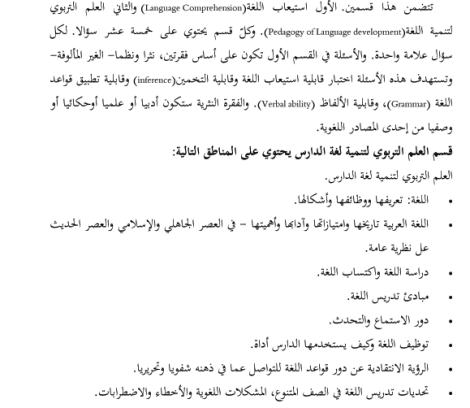
Language 2 will have questions for 30 marks, of which 15 marks will be for language comprehension and 15 marks for pedagogy. Each question carries one mark. The language comprehension part questions, will be from an unfamiliar passage or poem to test reading comprehension, grammar and verbal ability.
1. Language Comprehension (15 Questions)
i) Comprehension passage :
The unfamiliar passages are intended to check factual, inferential, analytical and evaluative comprehension.
ii) Grammar
Language elements included in the Course books of standard I to V. Such as :
- Article
- Concord
- Interrogatives - Yes / No Questions & ‘wh’ - Questions
- Question tags
- Prepositions
- Tense and Time
- Determiners
- Phrasal verbs
- Gerunds
- Reflexive Pronouns
- Linkers
- Auxiliaries
iii) Verbal ability
- Vocabulary
- Inflexions
- Affixes - Prefix & Suffix
- Antonyms, Synonyms
- Idioms and Phrases
2. Pedagogy of language development (15 Questions)
Questions will be based on the present Kerala Primary school curriculum (English)
- Language Acquisition and Learning
- Learning vs acquisition - Major schools of thought .
- Principles of Language Learning
Constructivism - Social Constructivism - Critical Pedagogy - Error Treatment - Cognitivism
- Language and Though
- Different views of Whorf, Piaget, Vygotsky and Chomsky - Relationship between language and thought.
- Objectives of Teaching English - Relevance of English - Curricular Objectives.
- Language skills and communication skills - Ways of improving language / communication skills - classroom activities - tools.
- ICT based aids in language teaching
- Modern Strategies - Nurturing multiple intelligence, Instruction to cater individual differences - Teaching learners with special needs.
- Evaluation - continuous and comprehensive evaluation - assessment of skills and products.
B. ARABIC - 30 Questions
4. ENVIRONMENTAL SCIENCE 30 Questions
A. Content (20 questions)
- Family - Relationships, job and duties of family members
- Water - Water sources, conservation of water, water pollution, prevention of water pollution
- Agriculture - Different types of agriculture, tools of agriculture, agricultural product, herbal garden
- Vehicles - Types of vehicles used
- Soil - Different soils, soil pollution. Prevention of soil pollution, soil erosion
- Earth - Ecosystem, environmental protection, impact of pollution on earth, remedial measures
- Shelters - Types of shelters, characteristics of animal shelters
- Diseases - Different types of diseases, causes, remedial measures, healthy habits
- Food - Types of food - natural and artificial foods, their merits and demerits
- Jobs - Types of jobs, different types of tools
- Public Institute - Services of people by public institute
- Energy - Types of energy, conservation of energy
- Animal world - Varieties of animals, movement, food habits, uses of animals
- Plants - Variety of plants-uses-herbal garden, photosynthesis
- First aid - Different types of first aid, need for first aid box
- Solar system - Plants, stars, sky, water
- Air - Importance of nature, air pollution, remediation
- Light - Eye, protection of eye, sources of light. reflection of light, shadow.
B. Pedagogy (10 questions)
- Science - Scope, meaning, history of science, role of science in human
- development
- Aims of learning science - Cognitive area, process skill area, scientific attitude, application area, scientific creativity
- Supplementary activities for enhancing science learning - Bulletin board, science club, wall magazine, day celebrations,
- Scientific process quiz etcSteps in scientific process
- Different process skills - Its developmental strategies
- Characteristics of science teaching
- Approaches of science teaching - Nature of learning activities, evaluation process etc
- Integrated approach in environmental science
- Evaluation strategy in science classes - Grading
- Different strategies in science teaching-learning process, Projects, seminars, debates, experiments, field trips etc
- Role of science teacher
- Learning aids- need, scope
- Unit analysis - Comprehensive planning - teaching manual
- Pedagogic analysis
- Analysis of primary science curriculum
- Action Research
- Evaluation system - Grading - continuous evaluation - preparation and administration of evaluation tools
5. MATHEMATICS 30 Questions
The examination will be broadly based on topics prescribed for class 1 to 5 in the Kerala State Syllabus for Mathematics, but some problems may have links to extensions of these concepts to the secondary stage.
A. Content (20 questions)
- Numbers: Natural Numbers : Place value, ordering, addition, subtraction, multiplication and division of natural numbers, factors and multiples, prime numbers, practical problems.
- Fractions : Fraction of a measure such as metre, litre, gram. Fractional parts of objects. Equal fractions, Operations on fraction. Decimal representation of fractions related to metric units of length, volume, weight. Operations on decimals, practical problems.
- Geometry : Perimeter of rectilinear figures (polygons), area of rectangles, patterns of geometrical figures, practical problems.
- Measurements : Basic operations in solving problems involving, length, weight, capacity, time, money and practical problems.
B. Pedagogy (20 questions)
- Nature of Mathematics - Abstraction, Understanding children’s thinking and reasoning. Language of Mathematics.
- Place of Mathematics in Curriculum - Aims and objectives of learning mathematics in primary classes -Values of mathematics learning Correlation with other subjects, Lower Primary and Upper Primary Mathematics, curriculum, syllabus
- Mathematics - Trends and Developments - Historical development of mathematics great mathematicians and their contributions
- Approach to Mathematics Learning - Proper learning experiences keeping in mind the characteristics of children, their natural learning capacity and the learning process
- Theoretical base of learning mathematics
- Teaching of Mathematics - Strategies and Methods
- Teaching strategies - Concept attainment, process oriented teaching, projects, seminars, assignments, field trip.
- Different teaching learning methods –Inductive and deductive method, analytic and synthetic method, project method, laboratory method.
- Learning Materials in Mathematics - Textbook and handbooks, information technology, mathematics club, mathematics laboratory, mathematics fair, mathematics library collecting mathematical puzzles, riddles.
- Mathematics Learning - Evaluation : Concept of continuous and comprehensive evaluation, evaluation activities, grading and recording the results, diagnosis, remedial teaching and error analysis.
KTET Category 1 Exam Pattern 2026
The K TET category 1 exam 2026 is conducted in offline mode and consists of 150 objective-type multiple-choice questions (MCQs) carrying a total of 150 marks. Candidates will get 1 mark for every correct answer, and there is no negative marking in the K TET exam. The duration of this exam is 2 hours 30 minutes. The absence of negative marking makes regular practice and mock test preparation highly important.
Part | Subject | Questions/Marks |
1 | Child Development and Pedagogy | 30 |
1 | Mathematics | 30 |
1 | Environmental Studies | 30 |
2 | Language 1 - Malayalam/Kannada/Tamil | 30 |
3 | Language 2 - Arabic/English | 30 |
Total | 150 |
Candidates can refer to the following links to get more detail about the upcoming KTET exam 2026.
- KTET Result 2026 Released: Check Your KTET December 2025 Scorecard & Download Result PDF
- KTET Special Notification 2026 Released for Government & Aided School Teachers
- KTET December 2025 Rectified Answer Key PDF Released for Category 1, 2, 3 & 4
- KTET December 2025 Category 1 Answer Key PDF Download
- KTET December 2025 Category 2 Answer Key PDF Download
- KTET 2025 Category 1 Answer Key and Question Paper for In-service Teachers | Download PDF
- KTET 2025 Previous Year Question Papers | Free Download PDF
Start Your KTET 2026 Preparation Today With CC Learning App
The competition for Kerala LP teacher recruitment is increasing every year. Candidates who start early preparation with the latest KTET Category 1 Syllabus 2026 PDF, proper guidance, and regular practice will have a better chance of success in the exam.
If you are preparing to become a Lower Primary teacher in Kerala, now is the best time to begin your KTET preparation seriously.
CC Learning App by Competitive Cracker provides complete KTET preparation support for aspirants across Kerala.
Features of CC’s KTET Coaching
- Complete KTET Category 1, 2, 3 & 4 preparation
- Personal mentor support
- Pedagogy-focused classes
- KTET previous year question discussions
- OMR mock tests and performance tracking
- Daily study plans
- Subject-wise revision classes
- Live and recorded KTET classes
- Instant doubt-clearing support
Instead of waiting for the official exam notification, aspirants should begin preparation immediately and follow a consistent study routine for better success in the Kerala Teacher Eligibility Test with CC Learning App.
Download CC Learning App and Start Your KTET Exam Preparation
Tap Here
Frequently Asked Questions
1. What is KTET Category 1?
KTET Category 1 is conducted for candidates aspiring to become Lower Primary (LP) teachers for Classes 1 to 5 in Kerala government and aided schools.
2. How can I download the KTET Category 1 Syllabus 2026 PDF?
Candidates can download the official KTET Category 1 Syllabus 2026 PDF from the Kerala Pareeksha Bhavan portal by visiting the syllabus section and selecting Category 1.
3. What subjects are included in the KTET Category 1 syllabus?
The KTET Category 1 syllabus includes:
- Child Development and Pedagogy
- Malayalam/Tamil/Kannada
- English/Arabic
- Mathematics
- Environmental Studies
4. What is the KTET Category 1 exam pattern 2026?
The KTET Category 1 exam consists of:
- 150 Multiple Choice Questions (MCQs)
- Total 150 Marks
- Offline OMR-based examination
- Duration: 2 Hours 30 Minutes
- No negative marking
5. Is there negative marking in KTET Category 1?
No. There is no negative marking in the KTET Category 1 examination.
6. Which section is most important in KTET Category 1?
Child Development and Pedagogy is considered one of the most important and high-scoring sections in the KTET Category 1 exam.
7. How should I prepare for KTET Category 1?
Candidates should prepare by:
- Following the latest KTET syllabus
- Practicing previous year questions
- Attending mock tests regularly
- Revising pedagogy topics
- Following a proper study timetable
8. Are KTET previous year questions important?
Yes. Practicing KTET previous year questions helps candidates understand the exam pattern, important topics, and difficulty level.
9. Can I prepare for KTET Category 1 through online coaching?
Yes. KTET online coaching helps candidates prepare systematically through live classes, recorded sessions, mock tests, revision classes, and mentor support.
10. Why is KTET Category 1 competition increasing in Kerala?
The competition is increasing due to the rising number of teacher aspirants and expected Lower Primary teacher vacancies across Kerala schools.
Notifications
Trending Updates


Related Blogs
September 26, 2026
How to Apply for KTET 2026 Online: Complete Registration Process & Application Form Guide
7 minute read
May 29, 2026
KTET Application Fee 2026: Category Wise Fee Structure, Payment Methods & Important Instructions
5 minute read
May 28, 2026
Best KTET Online Coaching: How to Choose the Right Platform for Your Category
6 minute read
May 28, 2026