
Table of Contents
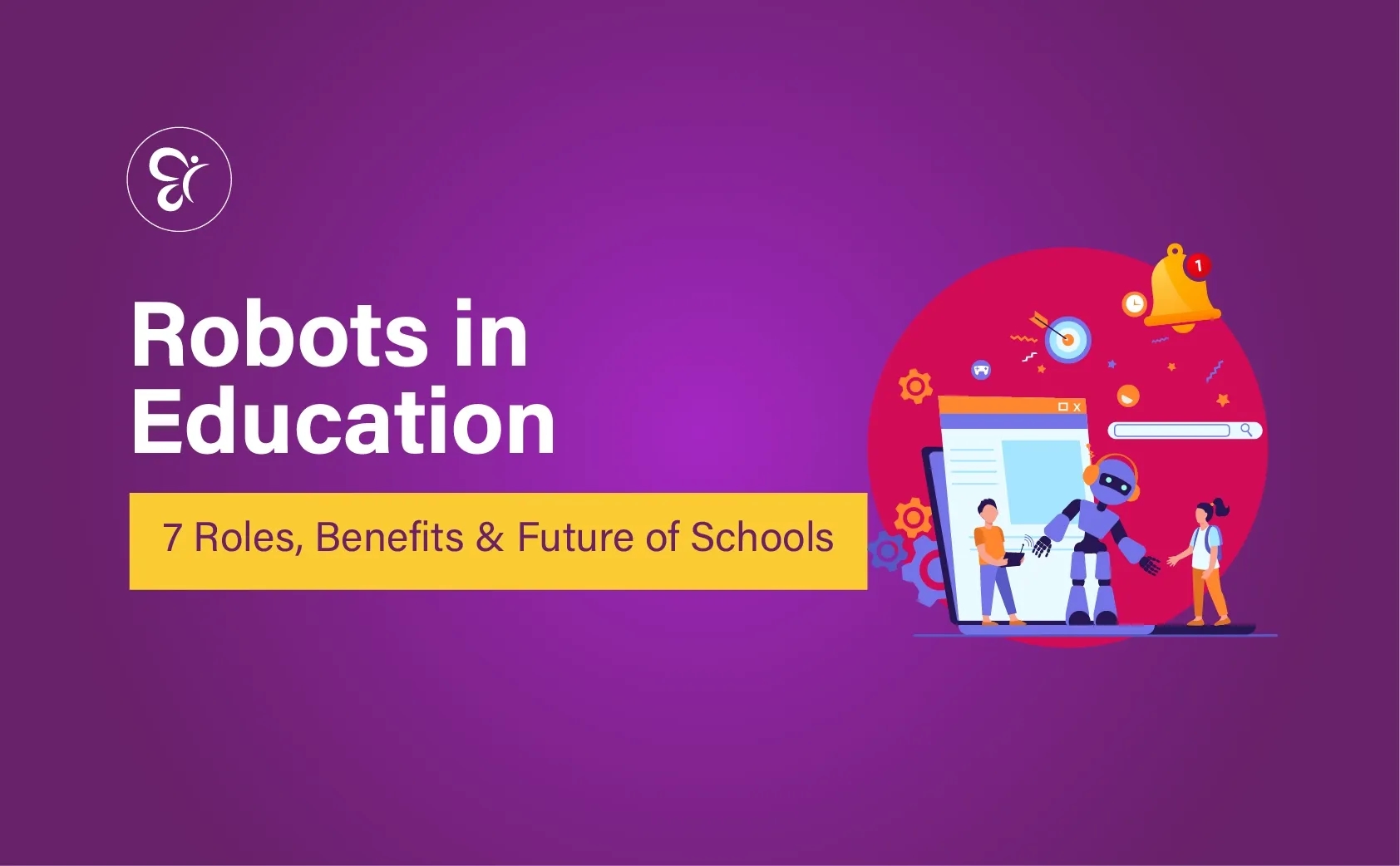
Robots are transforming modern education by making learning more interactive, engaging and practical. From STEM education and coding to Artificial Intelligence (AI) and personalised learning, educational robots help students develop future-ready skills. As schools increasingly adopt robotics-based learning, students gain valuable experience in technology, problem-solving, and innovation. In this article, see the 7 major roles of robots in education, their benefits, challenges, future trends and career opportunities.
What Are Educational Robots?
Educational robots are smart machines designed to help students learn in a fun and interactive way. They are used in schools and learning centers to teach subjects like Science, Technology, Engineering, Mathematics (STEM), Coding, Artificial Intelligence (AI) and Problem-Solving.
Unlike industrial robots that work in factories, educational robots are made for learning. Students can give them commands, program them, and watch them perform different tasks. This makes learning more practical, engaging and enjoyable.
Some common types of educational robots include:
- Coding robots for beginners
- AI-powered teaching assistants
- Interactive classroom robots
- STEM learning kits
- Humanoid robots
- Language-learning robots
- Robotics lab systems
Today, educational robots are becoming an important part of modern classrooms, helping students develop technical skills, creativity and critical thinking.
Why Robotics in Education Is Becoming a Major Trend?
Robotics is becoming more popular in schools because it helps students learn in a fun, practical and interactive way. As technology continues to grow, schools are using educational robots to help students develop important skills for the future.
Some of the main reasons why robotics in education is growing are:
- Students need more digital and technology skills for future jobs.
- Schools are giving greater importance to STEM education (Science, Technology, Engineering and Mathematics).
- Artificial Intelligence (AI) and smart technologies are becoming part of modern classrooms.
- Robots make learning more interesting and engaging for students.
- Robotics activities improve creativity, problem-solving and critical thinking skills.
- Many governments are encouraging schools to introduce technology-based learning.
- Career opportunities in robotics, AI, and technology fields are increasing every year.
Educational experts believe that technology skills will be essential for future careers. By learning robotics at an early age, students can gain confidence, improve their technical knowledge and prepare themselves for a technology-driven world.
Ready to start your success journey?
Join thousands of aspirants already preparing with us.
7 Major Roles of Robots in Education
Educational robots are changing the way students learn. They make lessons more interactive, practical, and enjoyable. From teaching coding to improving classroom engagement, robots in education are helping students develop important skills for the future.
1. Robots as Teaching Assistants
Educational robots can help teachers with everyday classroom activities. They can answer simple questions, conduct quizzes, present lessons and demonstrate concepts in an interesting way.
Robots can help by:
- Answering basic student questions
- Conducting quizzes and activities
- Presenting lessons
- Demonstrating science experiments
- Assisting with routine classroom tasks
This allows teachers to spend more time helping students individually and improving the overall learning experience.
2. Enhancing STEM Education
Robots make STEM education (Science, Technology, Engineering, and Mathematics) more practical and engaging. Instead of only reading from textbooks, students can learn by doing.
Students can learn:
- Science concepts
- Engineering basics
- Coding skills
- Mathematics applications
- Technology knowledge
Hands-on learning with robots helps students understand concepts better and remember them for longer.
3. Supporting Personalised Learning
Every student learns at a different speed. Some students need extra help, while others learn quickly.
Educational robots can:
- Track student progress
- Identify learning difficulties
- Provide instant feedback
- Adjust lessons based on student needs
- Offer extra practice when required
This helps students learn in a way that suits their individual learning style.
4. Teaching Coding and Programming
Coding is an important skill in today's digital world. Educational robots make coding easier and more fun because students can see their code work in real time.
Students can learn:
- Basic coding concepts
- Block-based programming
- Python basics
- Robotics programming
- AI and automation concepts
This practical experience helps students build confidence and develop valuable technology skills.
5. Improving Student Engagement
Many students learn better when lessons are interactive. Robots make learning more exciting by encouraging students to participate actively.
Robots support learning through:
- Interactive activities
- Educational games
- Visual demonstrations
- Hands-on projects
- Problem-solving challenges
When students enjoy learning, they are more likely to stay focused and perform better.
6. Supporting Special Education
Educational robots can also help students with special learning needs. They provide a friendly and consistent learning experience.
Robots can assist with:
- Communication skills
- Social interaction
- Language learning
- Behavioural development
- Autism support programs
Many students feel comfortable interacting with robots, making learning easier and more effective.
7. Preparing Students for Future Careers
Technology is changing the workplace, and many future jobs will require digital skills. Learning robotics at an early age helps students prepare for these opportunities.
Robotics education helps students develop:
- Critical thinking
- Problem-solving skills
- Creativity
- Teamwork
- Digital literacy
- Technical knowledge
These skills are valuable in careers related to robotics, artificial intelligence, engineering, software development and many other fields. By introducing robotics in education, schools can help students become confident learners and prepare them for success in a technology-driven future.
Key Benefits of Robots in Education
Educational robots are making learning more interactive, engaging and effective. They help students develop important skills while making classroom lessons more enjoyable.
Better Learning Outcomes
- Improves understanding of concepts
- Helps students learn through practical experience
- Increases knowledge retention
Increased Student Motivation
- Makes learning fun and interactive
- Encourages active participation
- Creates curiosity about technology
Development of Problem-Solving Skills
- Helps students analyze challenges
- Encourages logical thinking
- Improves decision-making skills
Encouragement of Innovation
- Promotes creativity and new ideas
- Inspires students to think like inventors
- Supports hands-on learning
Improved Collaboration
- Encourages teamwork and communication
- Develops leadership skills
- Helps students work together effectively
Real-World Learning Experience
- Connects classroom learning with real-life applications
- Builds technology and digital skills
- Prepares students for future careers in robotics and AI
By introducing robots in education, schools can help students develop the skills needed for success in a technology-driven world.
How Robotics Is Transforming Schools in Kerala?
Kerala is known for its strong education system and high literacy rate. Today, schools across the state are embracing robotics education, STEM learning, and Artificial Intelligence (AI) to prepare students for the future.
Many schools in Kerala are introducing:
- Robotics clubs and robotics labs
- Coding and programming classes
- AI and machine learning programs
- STEM education activities
- Innovation and technology hubs
- Smart and technology-driven classrooms
Schools and educational institutions in Kerala are increasingly organising robotics workshops, coding camps and AI learning programmes to help students build practical technology skills. The growing popularity of robotics competitions and STEM activities reflects the rising interest in technology among students.
Ready to start your success journey?
Join thousands of aspirants already preparing with us.
Challenges of Using Robots in Education
Although robots in education provide many advantages, schools may face certain challenges when implementing robotics programmes. Factors such as cost, infrastructure, teacher training and technology access can affect the successful adoption of educational robots.
However, as technology becomes more affordable and accessible, many of these challenges are gradually being reduced.
High Initial Costs
- Educational robots and related technology can be expensive for some schools.
- Setting up robotics labs and learning resources requires investment.
Teacher Training
- Teachers need proper training to use robotics effectively in the classroom.
- Regular skill development is important to keep up with new technologies.
Limited Access to Technology
- Not all schools have access to advanced robotics tools and equipment.
- Technology availability can vary between institutions.
Maintenance and Updates
- Educational robots require regular maintenance and software updates.
- Schools need ongoing technical support to ensure smooth operation.
Despite these challenges, the growing popularity of robotics education and continuous advancements in technology are making educational robots more accessible to schools around the world.
Future of Robots in Education
The future of robots in education is bright as schools continue to adopt new technologies. Educational robots are expected to make learning more interactive, personalized, and effective for students.
Some key trends include:
- AI-powered classrooms that adapt to students' learning needs
- Integration of Virtual Reality (VR) and Augmented Reality (AR) for immersive learning
- Better tracking of student progress through learning analytics
- Humanoid robots assisting teachers in classrooms
- Improved support for online and hybrid learning
- Greater focus on robotics, coding, AI and STEM education
Experts believe that robotics and Artificial Intelligence in education will play a major role in preparing students for future careers and helping them develop important digital skills.
Robotics Career Opportunities
Learning robotics, coding and Artificial Intelligence (AI) at an early age can open the door to many exciting career opportunities. As technology continues to advance, the demand for skilled professionals in robotics and automation is growing across industries.
Some popular career options in this field include:
- Robotics Engineer
- AI Engineer
- Automation Specialist
- Machine Learning Engineer
- Software Developer
- Embedded Systems Engineer
- Data Scientist
- Mechatronics Engineer
- Research Scientist
- Robotics Technician
With the increasing use of AI, robotics and automation technologies, companies are actively seeking professionals with technical and problem-solving skills. This makes robotics education a valuable investment for students who want to build successful careers in the future technology-driven world.
Why Students Should Learn Robotics Today?
In today's digital world, technology is becoming an important part of every industry. Learning robotics helps students develop valuable skills that will benefit them in both education and future careers.
Robotics helps students:
- Build technical and digital skills
- Improve creativity and innovation
- Develop confidence in using technology
- Strengthen logical and critical thinking
- Enhance problem-solving abilities
- Prepare for future careers in AI, robotics and technology
By learning robotics at an early age, students can gain practical knowledge and stay ahead in a rapidly evolving technology-driven world.
Start Your Robotics Learning Journey with CC Learning App
Ready to explore the world of robotics, coding, AI and STEM education? Join CC Learning App, multi learning platform and gain access to expert-led courses, interactive learning resources, and technology-focused training designed to help students build future-ready skills.
Enrol today and take the first step toward a successful career in technology and innovation!
Ready to start your success journey?
Join thousands of aspirants already preparing with us.
Frequently Asked Questions
1. What are robots in education?
Robots in education are programmable machines designed to support teaching and learning. They help students learn coding, STEM subjects, problem-solving and technology skills through interactive experiences.
2. How do educational robots help students?
Educational robots improve engagement, enhance STEM learning, develop coding skills, encourage creativity and strengthen problem-solving abilities.
3. Can robots replace teachers?
No. Robots are designed to assist teachers, not replace them. Human educators remain essential for guidance, emotional support, mentorship and critical thinking development.
4. Why is robotics education important?
Robotics education prepares students for future careers in technology, AI, engineering, automation and data science while developing valuable real-world skills.
5. What is the future of robotics in schools?
The future includes AI-powered classrooms, personalized learning systems, advanced educational robots, virtual learning integration and increased STEM-focused education.
6. Are robotics skills useful for future jobs?
Yes. Robotics, AI, automation, programming and digital literacy are among the most in-demand skills in emerging industries worldwide.
7. Is robotics education growing in Kerala?
Yes. Many schools and educational institutions in Kerala are introducing robotics clubs, coding programs, STEM labs and AI-based learning initiatives to prepare students for future careers.
Trending Updates



Related Blogs
View all
August 25, 2026
Kerala PSC Police Constable Driver Exam Date 2026 | Submit Confirmation for Category 030/2026
6 minute read
August 24, 2026
NICL Assistant Exam Date 2026 Out: Prelims & Mains Schedule
9 minute read
August 24, 2026
Kerala SET July 2026 Revised Hall Ticket: New Admit Card Download from September 1
6 minute read
August 24, 2026