
Table of Contents
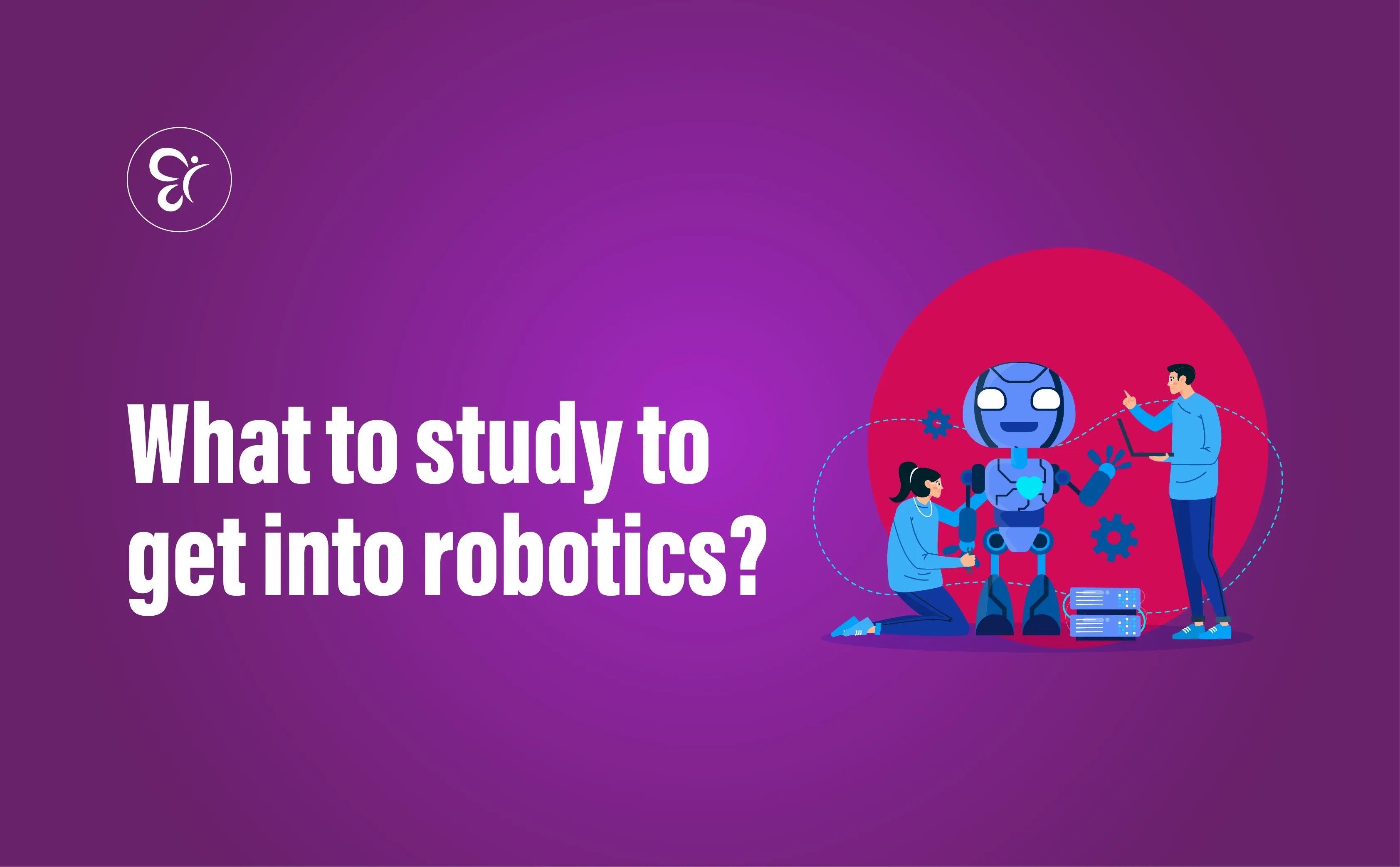
Robotics is becoming one of the most exciting career options for students today. Robots are now used in industries, hospitals, schools, agriculture, and many other fields. With the growth of Artificial Intelligence (AI) and automation, the demand for robotics professionals is increasing rapidly. If you are wondering what to study to get into robotics, the first step is to learn subjects like mathematics, science, programming and electronics. This article will help you understand the skills, courses and career opportunities available in robotics.
What Is Robotics?
Robotics is an interdisciplinary field that combines multiple areas of science and engineering to design, build, programme and operate robots. A robot is essentially a machine capable of performing tasks automatically or semi-automatically using sensors, software and mechanical components.
Modern robots are used in:
- Manufacturing industries
- Hospitals
- Warehouses
- Educational institutions
- Space exploration
- Agriculture
- Military applications
- Self-driving vehicles
To develop such systems, professionals must understand several technical subjects.
Ready to start your success journey?
Join thousands of aspirants already preparing with us.
What Should You Study to Get Into Robotics?
If you want to build a career in robotics, you need to learn a mix of science, technology and engineering subjects. Robotics engineering includes mathematics, physics, programming, electronics, mechanical engineering, Artificial Intelligence and automation. Here are the main subjects and skills you should focus on.
1. Mathematics
Mathematics is an important part of robotics. Robots use maths to calculate movement, position, direction and distance. Important topics include:
- Algebra
- Trigonometry
- Calculus
- Linear Algebra
- Probability
- Statistics
A good knowledge of mathematics will help you understand how robots move and make decisions.
2. Physics
Physics helps you understand how robots move and work in the real world. Physics is useful for understanding motors, sensors, robotic arms and other robot parts.
Focus on:
- Motion
- Force
- Energy
- Mechanics
- Electricity
- Magnetism
3. Programming
Programming is one of the most important robotics skills. It tells robots what to do and how to respond to their surroundings. Popular programming languages for robotics include:
- Python - Useful for AI, machine learning, and computer vision
- C++ - Used for robot control and embedded systems
- Java - Used in some robotics applications
- MATLAB - Useful for simulations and control systems
If you are a beginner, Python for robotics is a good place to start.
4. Electronics and Embedded Systems
Robots use electronic components to sense and interact with their surroundings.
You should learn about:
- Circuits
- Sensors
- Actuators
- Microcontrollers
- Digital electronics
- Embedded systems
You can gain practical experience using platforms such as Arduino, Raspberry Pi, ESP32 and STM32.
5. Mechanical Engineering
Robots have physical parts such as wheels, joints, motors and robotic arms. Basic mechanical engineering for robotics helps you understand how these parts work.
Important topics include:
- Mechanics
- Kinematics
- Dynamics
- Machine Design
- Robotic Mechanisms
6. Artificial Intelligence and Machine Learning
Modern robots are becoming smarter with Artificial Intelligence (AI) and Machine Learning (ML). These technologies help robots recognise objects, learn from data, make decisions and navigate their surroundings.
You can learn:
- Machine Learning
- Deep Learning
- Computer Vision
- Neural Networks
- Natural Language Processing
AI and robotics together are creating many new career opportunities.
7. Control Systems and Automation
Control systems and automation help robots perform tasks correctly and efficiently. These skills are especially useful for careers in industrial robotics and automation. Important areas include:
- PID Controllers
- Feedback Systems
- Motion Control
- PLC Programming
- Industrial Automation
Best Courses to Study Robotics After Plus Two
After Plus Two, students interested in a career in robotics often ask, “Which degree is best for robotics?” There is no single course that is right for everyone. Your choice depends on whether you are more interested in robot design, programming, electronics, Artificial Intelligence or automation.
Here are some of the best robotics courses after Plus Two to consider:
1. B.Tech in Robotics Engineering
B.Tech in Robotics Engineering is a specialised degree for students who want to study robotics in depth. It is a good option for students who want to focus directly on robotics engineering and robot development. The course covers areas such as:
- Robot Design
- Robotics Programming
- Automation
- Artificial Intelligence
- Control Systems
2. Mechanical Engineering
Mechanical Engineering is a strong choice for students interested in the physical design and movement of robots. This course is suitable for students who want to work on robot design, robotic arms and mechanical systems.
You can learn about:
- Machine Design
- Mechanics
- Robotics Mechanisms
- Kinematics
- Manufacturing
3. Electronics and Communication Engineering (ECE)
ECE is a good option if you are interested in the electronic side of robotics. It helps you understand how robots sense and interact with their surroundings. ECE can prepare you for careers involving robotics hardware, embedded systems and automation.
Key areas include:
- Sensors
- Embedded Systems
- Microcontrollers
- Circuits
- Robotics Hardware
4. Computer Science Engineering (CSE)
If you are interested in the software side of robotics, Computer Science Engineering can be an excellent choice. CSE is especially useful for students who want to work in robotics software, AI-powered robots and autonomous systems.
You can develop skills in:
- Programming
- Artificial Intelligence
- Machine Learning
- Computer Vision
- Data Science
5. Mechatronics Engineering
Mechatronics Engineering is one of the popular degree choices for students interested in robotics. Because robotics requires knowledge of both hardware and software, mechatronics for robotics can provide a well-rounded foundation. It combines different areas of engineering, including:
- Mechanical Engineering
- Electronics
- Computer Science
- Control Systems
- Automation
6. Artificial Intelligence and Data Science
Students interested in AI-powered robotics can also consider a degree in Artificial Intelligence and Data Science. These skills are useful for developing intelligent and autonomous robots.
These courses can help you learn:
- Machine Learning
- Deep Learning
- Computer Vision
- Data Analysis
- AI Algorithms
Start Your Robotics Learning Journey with CC Learning App
Interested in robotics, coding, AI, STEM education and future technology careers? The CC Learning App, multi learning app, can help students build a strong learning foundation through structured courses, expert-led classes, study materials, practice resources and continuous learning support.
Whether you are starting after school or planning your next academic step after Plus Two, developing the right knowledge and skills today can help you prepare for tomorrow’s technology-driven careers.
Start learning with CC Learning App today and take your first step towards a future in robotics, AI, engineering and emerging technologies.
Ready to start your success journey?
Join thousands of aspirants already preparing with us.
Frequently Asked Questions
1. Which subject is most important for robotics?
Mathematics and programming are considered the most important subjects because they form the foundation of robot design, movement and intelligence.
2. Is robotics a good career in India?
Yes. Robotics is one of the fastest-growing technology sectors in India, offering excellent career opportunities in automation, AI, manufacturing, healthcare and research.
3. Can I study robotics after Plus Two?
Absolutely. Students can pursue B.Tech programs in Robotics Engineering, Mechatronics, Mechanical Engineering, Electronics and Communication Engineering, or Computer Science.
4. Which programming language is best for robotics?
Python and C++ are the most widely used programming languages in robotics.
5. Do robotics engineers need coding skills?
Yes. Coding is essential because robots operate through software and control systems.
6. Is AI necessary for robotics?
Modern robotics increasingly relies on AI technologies such as machine learning, computer vision, and intelligent decision-making systems.
Trending Updates


Related Blogs
View all
July 7, 2026
How Robotics and AI Help Students Build Real-World Skills
8 minute read
April 2, 2026
Robotics for Kids: A Complete Guide for Parents | Learn Robotics with CC Robotics
3 minute read
April 2, 2026
Why Robotics Training is Essential for School Students in 2025 | Building Future Innovators
3 minute read
July 7, 2026