
Table of Contents
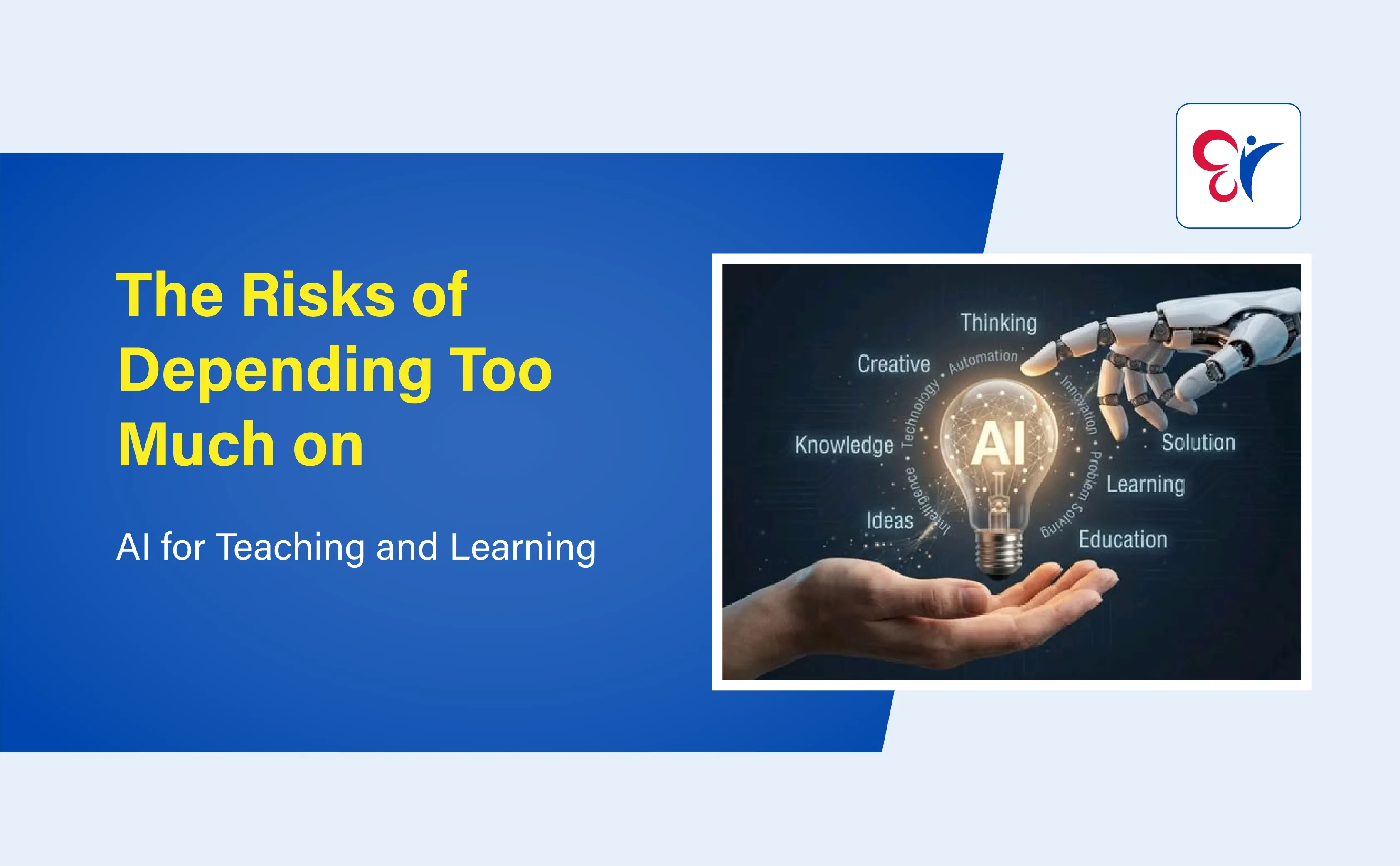
Artificial intelligence (AI) is changing education by helping teachers create lesson plans, worksheets and learning activities. However, overdependence on AI in education can affect students’ critical thinking, creativity and independent learning. It also raises concerns about data privacy and incorrect information. How can teachers balance AI tools with human teaching? Learn nine key risks of AI in education and practical ways to use AI responsibly while keeping students at the centre of learning.
What Is Overdependence on AI in Education?
Overdependence on AI in education means relying too heavily on artificial intelligence for teaching, homework, lesson planning and assessments.
For example, a student may ask AI to write an entire assignment without understanding the topic. A teacher may also use an AI-generated lesson plan without checking the facts or adapting it to the students' needs.
AI can support learning when used correctly. Problems arise when it replaces independent thinking, human guidance and practical learning experiences.
Upgrade your teaching skills with AI-powered learning tools.
Enrol Now
9 Risks of Depending Too Much on AI for Teaching and Learning
1. Reduced Critical Thinking Skills
Critical thinking helps students understand information, solve problems and make decisions. Students develop these skills by asking questions, exploring ideas and finding answers independently.
When students rely on AI for every answer, they may lose opportunities to practise these skills. Copying an AI-generated answer does not mean they understand the subject.
For example, a student may use AI to solve a mathematics problem but struggle to solve a similar question during an examination.
What teachers can do: Encourage students to attempt questions independently, explain their answers and show their working steps before using AI. |
2. Lower Creativity and Original Thinking
AI tools can generate essays, stories, presentations and project ideas in seconds. While this can save time, excessive AI use may limit opportunities for students to develop their own ideas.
Students need opportunities to think creatively, express their opinions and learn from personal experiences. Teachers also need to create lessons that reflect their students' interests and abilities.
What teachers can do: Include storytelling, drawing, group projects, experiments and independent writing. Ask students to develop their ideas first and use AI only for additional support. |
3. Incorrect Information from AI Tools
One of the major disadvantages of AI in education is the risk of inaccurate information. AI tools can produce answers that sound convincing but contain factual errors or misleading explanations.
If teachers use AI-generated notes without checking them, students may learn incorrect concepts. Students who accept every AI response as true may also struggle to identify mistakes.
What teachers can do: Verify facts using reliable textbooks, official websites and trusted educational resources. Teach students to compare information and check important claims before accepting them. |
4. Less Human Interaction in Classrooms
Education involves more than reading notes and receiving answers. Students also learn through classroom discussions, teamwork, personal feedback and conversations with teachers.
Excessive dependence on AI may reduce these interactions. Students might turn to chatbots for every doubt instead of asking questions or discussing problems with classmates.
Human interaction is particularly important in early childhood education, where children develop communication and social skills through play and group activities.
What teachers can do: Encourage classroom discussions, peer learning, group activities and individual feedback. AI should support teaching, not replace meaningful relationships between teachers and students. |
5. Student Privacy and Data Security Risks
AI tools may process information entered by users. Uploading student assignments, photographs, assessment records or personal details without checking privacy safeguards can expose sensitive information.
Children need particular protection because they may not fully understand how their personal data is handled.
What teachers can do:
Protecting student information should be a priority whenever AI is used in education. |
6. Bias and Unfair Learning Experiences
AI tools may produce biased, incomplete or culturally unsuitable information. Their responses may not always reflect the needs of students from different backgrounds.
For example, an AI-generated lesson may use unfamiliar examples or provide explanations that do not suit students' language needs.
In Kerala, teachers work with students from different linguistic, cultural and social backgrounds. Learning materials should be understandable and relevant to these learners.
What teachers can do: Review AI-generated content for accuracy, fairness and cultural relevance. Use familiar examples and adapt lessons to students' abilities and learning needs. |
7. Overreliance on AI for Homework and Assessments
AI can generate essays, summarise chapters and answer questions. However, when students use it to complete every assignment, teachers may find it difficult to assess their actual understanding.
Students may also struggle during examinations when they must answer questions independently.
What teachers can do: Combine written assignments with oral questions, classroom tests, presentations and practical activities. Establish clear rules about acceptable AI use and ask students to explain their work. |
8. The Digital Divide Among Students
Not every student has access to computers, smartphones, reliable internet or paid AI tools. These differences can create unequal learning opportunities.
Students with better access to technology may benefit from AI-based resources, while others may find it difficult to use them.
This is an important consideration for schools in Kerala, where access to digital devices and internet connectivity can vary between households.
What teachers can do: Provide printed notes, offline activities and classroom support. Avoid making paid AI tools compulsory and offer alternative ways for students to complete assignments. |
9. Reduced Teacher Autonomy and Professional Judgment
Teachers use their knowledge and experience to plan lessons, understand students' difficulties and assess progress. AI-generated suggestions may not consider every student's abilities, emotions or circumstances.
If teachers follow AI recommendations without reviewing them, they may overlook important classroom needs.
What teachers can do: Treat AI-generated lesson plans and assessments as starting points. Check the content, make necessary changes and use professional judgment when making teaching decisions. |
How Does AI Overdependence Affect Early Childhood Education?
Early childhood education requires special attention because young children learn through play, movement, observation, conversation and hands-on activities. Excessive dependence on AI may reduce opportunities for children to explore their surroundings, communicate with others and solve simple problems independently.
For example, children benefit from building objects, drawing pictures, listening to stories and participating in group activities. These experiences support learning and development in ways that simply receiving digital answers cannot replace.
Teachers should choose age-appropriate technology carefully and ensure that children continue to receive personal guidance and practical learning opportunities.
Why Are Human Teachers Still Important in the Age of AI?
AI can provide information and assist with routine teaching tasks, but teachers play a much wider role in education.
Teachers recognise learning difficulties, encourage participation and provide personal feedback. They also help students develop confidence, communication skills, teamwork and emotional awareness.
A teacher can notice when a student is confused and explain a topic differently. Teachers also create supportive classrooms where students feel comfortable asking questions.
Therefore, AI cannot fully replace human teachers. Technology should help teachers work more effectively while allowing them to focus on students' individual needs.
How Can Teachers Use AI Responsibly in Education?
Teachers can benefit from AI tools by following these simple practices:
- Verify information: Check AI-generated facts, answers and examples before using them in lessons.
- Encourage independent thinking: Allow students to attempt questions and develop ideas before seeking AI assistance.
- Protect student data: Avoid sharing personal information through unapproved platforms.
- Set clear rules: Explain when AI assistance is allowed and how students should acknowledge its use.
- Maintain classroom interaction: Continue discussions, practical activities, group work and personal feedback.
- Adapt teaching materials: Check that AI-generated worksheets and lesson plans suit students' age and abilities.
- Teach AI literacy: Help students understand that AI can make mistakes and that its answers need to be checked.
These steps can help teachers balance educational technology with effective teaching methods.
Why Are Teacher Training Courses Important in the AI Era?
As AI becomes more common in education, teachers need strong teaching skills and an understanding of educational technology. A professional teacher training course can help aspiring teachers develop skills in lesson planning, classroom management, communication, child psychology and student assessment.
For those interested in early childhood education, a Montessori TTC course can provide knowledge of child-centred learning, practical activities and teaching methods suited to young children.
Teacher training also helps educators understand how students learn and how to choose suitable teaching methods. These skills are important when deciding where AI can support learning and where direct teacher involvement is necessary. The goal is to prepare teachers to use technology wisely without depending on it for every classroom task.
Upgrade Your Teaching Skills with an AI for Teachers Course
Artificial intelligence is transforming modern education, helping teachers simplify lesson planning, create worksheets, prepare quizzes and develop interactive learning activities. Learning to use AI tools for teachers can save preparation time, encourage creativity and make classroom learning more engaging for students with different learning needs.
The AI for Teachers Course by CC Learning App helps educators explore practical applications of artificial intelligence in teaching and learning. Whether you are an aspiring teacher or an experienced educator, this course can help you develop digital teaching skills, explore AI-powered educational tools and discover new ways to create effective learning materials.
Kickstart your AI-powered teaching journey today! Download the CC Learning App, multi learning app, and enrol in the AI for Teachers Course to explore smarter ways to teach.
Start Learning AI for Smarter Classroom Teaching by CC Learning App
Get the App
Frequently Asked Questions
1. What are the disadvantages of AI in education?
The main disadvantages of AI in education include inaccurate information, reduced critical thinking, privacy risks, biased responses, unequal access to technology and less human interaction when AI replaces classroom activities.
2. How does AI affect students' critical thinking?
Overdependence on AI may reduce opportunities to practise reasoning when students copy answers without understanding them. Independent problem-solving and guided AI use can help maintain critical thinking skills.
3. Can AI replace human teachers?
No. AI can support lesson planning and learning activities, but human teachers provide personal guidance, empathy, classroom management and professional judgment that AI cannot fully replace.
4. Is AI safe for children in education?
AI safety depends on the tool, the child's age, adult supervision and privacy safeguards. Teachers and parents should check whether a platform is suitable before allowing children to use it.
5. How can teachers use AI responsibly?
Teachers should verify AI-generated information, protect student data, establish clear rules and encourage independent thinking. AI should support teaching rather than replace teacher judgment.
6. What is overdependence on AI in education?
Overdependence on AI in education means relying too heavily on AI for teaching, homework and assessments instead of developing independent knowledge, reasoning and professional skills.
7. Why are teacher training courses important in the AI era?
Teacher training courses help educators develop lesson-planning, classroom management, communication and child development skills. These abilities help teachers use educational technology responsibly.
8. How does AI affect early childhood education?
Excessive AI use may reduce opportunities for play, practical learning and social interaction. Young children need hands-on activities, communication and personal guidance to support their development.
Notifications
Trending Updates



Related Blogs
October 12, 2026
AI for Teachers: Best AI Tools, How to Use Them & Benefits for Classroom Teaching
12 minute read
November 8, 2025
AI for Teachers Course in Kerala | Learn the Best AI Tools for Educators
3 minute read
July 10, 2026
How to Use AI for Content Creation Without Getting Penalized
10 minute read
July 29, 2026